

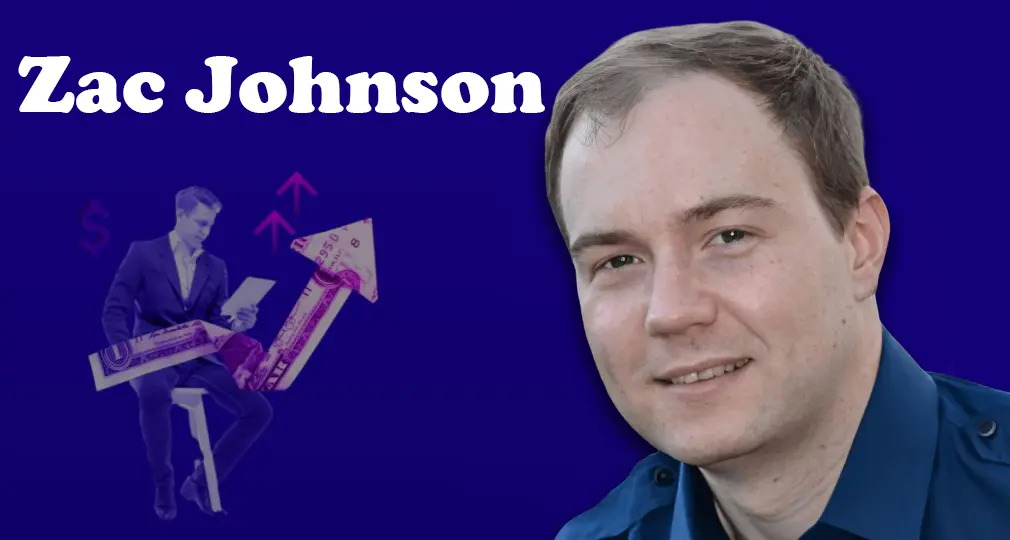
Zac Johnson is one of those names that keeps popping up when people talk about old-school affiliate marketing, and yeah, not by accident. He started making money online in the mid-1990s, back when most people still treated the web like a weird toy, not a cash machine. Well, actually, that timing matters because getting in early gave him a front-row seat to banners, CPA, email lists, Amazon referrals, lead generation, blogging, and all the messy stuff that later became “digital marketing.” This is cool because his career is not a polished LinkedIn fairy tale; it looks more like a grinder’s session log, full of tests, wins, busted campaigns, and one or two absolutely wild hands.
Who Is Zac Johnson?
Johnson built his name as an affiliate marketer, blogger, entrepreneur, and online business educator. For example, public interviews describe him as a self-taught marketer who began earning online as a teenager, including designing website banners for around $1 each. That sounds tiny, but between us, that is exactly how serious players start: small stakes, fast feedback, no excuses. He later moved into affiliate offers, CPA campaigns, content properties, personal branding, podcasts, and courses, which is a pretty stacked table for one operator.
| Data Point | Reported Detail | Why It Matters |
|---|---|---|
| Online start | Mid-1990s | Early mover advantage before affiliate marketing became crowded |
| Teen hustle | Banners sold for about $1 each | Shows the hands-on, test-first mindset |
| Blog launch | ZacJohnson.com launched in 2007 | Turned personal experience into an authority platform |
| Big campaign claim | $860,538.38 profit in 4 months | A famous “super affiliate” style case study number |
| Traffic range | About 2,000 visits/day, up to 5,000 with promotion | Shows how content plus promotion can move volume |
The Early Internet Years
Back then, affiliate marketing was not the neat dashboard game people know today. It was clunky banners, raw HTML pages, ugly landing pages, sketchy tracking, and payment terms that made you check stats like a nervous poker player watching the river card. Zac’s early advantage was simple but powerful: he learned by placing actual bets with his time, traffic, and attention. Honestly, that works, because no course teaches pressure like watching a campaign spend money while the conversion rate refuses to behave.
- He learned monetization before “creator economy” became a buzzword.
- He experimented with banners, affiliate links, lead generation, and niche content.
- He used personal results as proof, not just theory.
- He turned old campaign experience into blog content and educational products.
The Amazon and Celebrity Site Play
Money started getting more serious when Zac built niche sites and sent visitors toward affiliate offers, including Amazon-related celebrity movie and music purchases. Anyway, that play was clever because celebrity traffic already had intent: people searched names, albums, movies, bios, and fan material. Instead of fighting for broad keywords like “make money online” on day one, he worked closer to where users already wanted something. That is great table selection, and in gambling terms, table selection is half the damn game.
ZacJohnson.com and the Personal Brand Move
Numbers changed again when Zac launched ZacJohnson.com in 2007 and started teaching what he had already done for years. This was not just a blog; it became a public proof file, a trust engine, and a funnel into speaking, partnerships, courses, and authority. Besides, between us, a personal brand in affiliate marketing is like having a VIP host at the casino: it does not guarantee the win, but doors open faster. The site helped him package his experience into tutorials, case studies, interviews, and business advice that beginners could actually follow.
| Asset | Role in the Business | Player-Style Read |
|---|---|---|
| ZacJohnson.com | Authority blog and personal brand hub | The main table where reputation stacks up |
| Blogging.org | Education and membership-style product | The house product, not just another affiliate chip |
| Podcast interviews | Networking, authority, audience growth | Free trust-building with compounding upside |
| Affiliate campaigns | Performance-based revenue | High-risk, high-skill, no fluffy applause |
The Famous $860,538.38 Case Study
Campaigns made Zac’s name heavier because one reported highlight says he made $860,538.38 profit in 4 months from one website. Let’s not pretend that is a normal beginner result; that is a monster hand, the kind people remember because the number looks almost unreal. Well, actually, the useful lesson is not “copy the exact campaign,” because that ship probably sailed years ago. The real lesson is that affiliate upside can become ridiculous when offer fit, traffic, tracking, conversion rate, and timing all hit at once.
Traffic, Promotion, and Daily Volume
Traffic is where the story gets more practical, because one interview mentioned around 2,000 daily visitors on average, with spikes up to about 5,000 visitors per day when promotion got heavier. That is not random magic; it is the grind of guest posts, podcast appearances, search visibility, and content that keeps pulling people back. For example, when a marketer can send 2,000 targeted users per day into offers, email capture, or product funnels, small conversion changes suddenly matter a lot. This is where a 1% lift is not “nice,” it is money on the felt.
- 2,000 visits/day at 1% conversion = 20 actions per day.
- 2,000 visits/day at 2% conversion = 40 actions per day.
- 5,000 visits/day at 1% conversion = 50 actions per day.
- 5,000 visits/day at 3% conversion = 150 actions per day.

The Funnel Side: From Affiliate to Product Owner
Offers are one thing, but building your own product changes the whole game. In one described funnel, Blogging.org used a 7-day email sequence, then a $1 trial for 7 days, followed by a $97/month membership structure with content unlocked over 8 weeks. That is pretty slick because the funnel does not ask for full trust instantly; it lets people test the room before buying more chips. We are in love with that structure because it turns cold visitors into email leads, trial users, members, and maybe long-term fans.
| Funnel Step | Reported Detail | Why It Works |
|---|---|---|
| Email capture | 7-day email sequence | Warms up the visitor before the paid offer |
| Trial | $1 for 7 days | Lowers friction and gets the user inside |
| Membership | $97/month | Creates recurring revenue instead of one-off commissions |
| Content release | Course access over 8 weeks | Keeps users engaged beyond the first login |
| Typical value | 2-3 months, or roughly $194-$291 per sale | Makes acquisition math easier to calculate |
Why Super Affiliates Think Differently
Testing separates a super affiliate from a regular content publisher. A normal blogger asks, “Is this article good?” while a serious affiliate asks, “What is the EPC, refund rate, click-through rate, payout cap, approval speed, and traffic source quality?” That sounds cold, but honestly, it works. Affiliate marketing is not only writing; it is bankroll management, offer selection, split testing, and knowing when to stop feeding a losing campaign.
- EPC: Earnings per click, useful for comparing offers.
- CPA: Cost per action, common in lead-generation campaigns.
- CTR: Click-through rate, the first pulse check on creative quality.
- CR: Conversion rate, the number that decides whether the campaign breathes.
- LTV: Lifetime value, critical when selling subscriptions or memberships.
The Blog as a Bankroll Builder
Besides the flashy campaign numbers, Zac’s smarter long game was content. A blog keeps working after the first publish date, especially when it ranks, earns links, builds trust, and feeds an email list. Between us, that is healthy leverage because one article can act like a little dealer pushing traffic into the funnel day after day. This is great because paid ads can disappear overnight, but owned content and email lists give the operator a little more control.
Lessons Marketers Can Steal From Zac Johnson
Anyway, the first lesson is that early action beats perfect planning. Zac did not wait for the perfect logo, perfect niche, perfect funnel, or perfect guru blessing; he tested, learned, and kept going. The second lesson is that affiliate marketing rewards people who understand numbers and human behavior at the same time. The third lesson, and this one is huge, is that a personal brand can turn private campaign experience into public authority.
- Start with one niche where buyer intent is visible.
- Track clicks, conversions, revenue, refunds, and traffic source quality.
- Build an email list before trying to sell anything expensive.
- Use content as a long-term traffic asset, not just a posting habit.
- Move from pure affiliate commissions into owned products when the audience asks for more.
The Risk Nobody Should Ignore
Risk is the part beginners love to skip, which is funny because affiliates live and die by risk. Offer terms change, accounts get closed, tracking breaks, advertisers pause budgets, Google updates roll through, and paid traffic can burn cash faster than a bad blackjack shoe. So, no, the Zac Johnson story should not be read as “easy money online.” It is better read as a long, disciplined session where the player survives because he tracks the table, protects the bankroll, and does not marry one tactic forever.
Modern Affiliate Takeaways From an Old-School Operator
Operators today can still use Zac’s playbook, but they need to update the tools. SEO is more competitive, social platforms are noisier, email deliverability is stricter, and audiences are allergic to fake screenshots and lazy hype. Although, look, the core game has not changed that much: find attention, earn trust, match the right offer, measure the result, and scale only what proves itself. That is not glamorous, but it is the kind of boring that prints when done properly.
| Old-School Move | Modern Version | Practical Note |
|---|---|---|
| Niche websites | Topical authority sites with expert content | Depth matters more than thin keyword pages |
| Banner traffic | Native ads, social ads, creator placements | Creative testing is still king |
| Email lists | Segmented newsletters and automated sequences | Trust beats blast frequency |
| CPA offers | Lead-gen, SaaS trials, finance, education, apps | Compliance matters more than ever |
| Blog authority | Personal brand plus multi-channel content | Search, YouTube, podcasts, and social can reinforce each other |
Finally, Zac Johnson’s story works because it is not clean, not academic, and definitely not built around one lucky trick. It is a long game of traffic, testing, offers, authority, and knowing when to turn experience into an asset. For example, the jump from affiliate links to owned products is not just “growth,” it is moving from rented chips to owning part of the room. That is the real lesson here: play the numbers, keep your edge, and when a campaign starts talking back through the data, listen fast.
Read more: Finance affiliate programs UK