



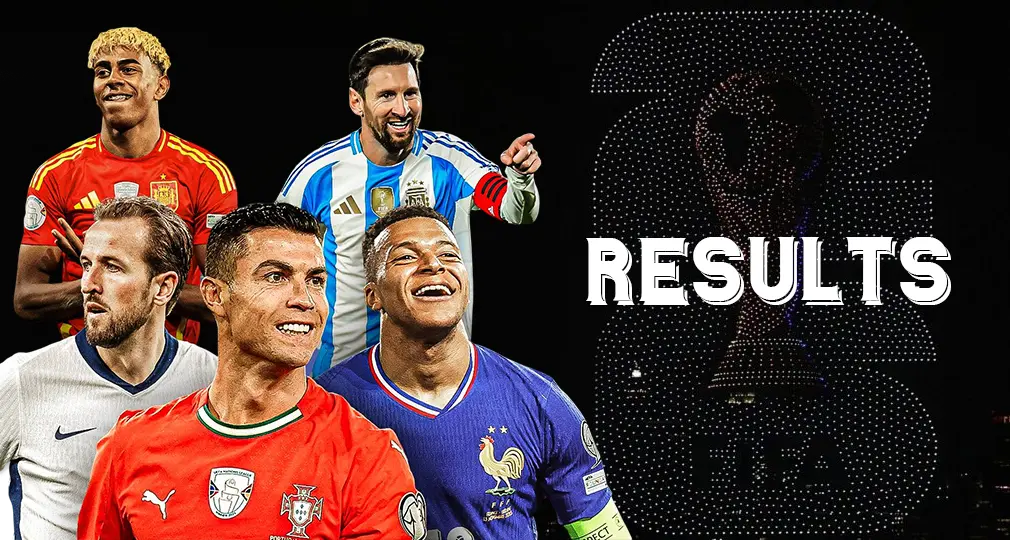
Spain closed the 2026 FIFA World Cup with a 1-0 extra-time win over Argentina, and Ferran Torres landed the decisive punch in the 106th minute. The first 48-team World Cup produced 104 matches, 308 goals and enough strange scorelines to wreck a perfectly sensible accumulator in one evening. Well, actually, Spain’s title was not strange at all: they conceded only one goal across eight matches and kept seven clean sheets. Argentina reached another final, England took third place after a ridiculous 6-4 win over France, while Kylian Mbappé grabbed the Golden Boot with 10 goals. For bettors, this tournament was a loud reminder that defensive consistency, team totals and player props often make more sense than chasing heroic 12-leg coupons.
World Cup 2026 key facts
Tournament scale was the first thing that hit me: 48 teams, 12 groups, a new Round of 32 and 104 matches spread across Canada, Mexico and the United States. FIFA recorded 6,810,966 spectators, which works out at roughly 65,490 people per game. The 308 goals produced an average of 2.96 per match, so this was not some month-long collection of cautious 1-0 results. Besides, between us, the group stage alone generated 215 goals in 72 fixtures, and that is honestly wild. A 39-day schedule across 16 stadiums gave us more betting opportunities, but it also created more rotation, fatigue and lineup traps than the old 32-team format.
| Category | World Cup 2026 figure |
|---|---|
| Champion | Spain |
| Runner-up | Argentina |
| Third place | England |
| Fourth place | France |
| Participating teams | 48 |
| Matches played | 104 |
| Total goals | 308 |
| Average goals per match | 2.96 |
| Total attendance | 6,810,966 |
| Average attendance | Approximately 65,490 per match |
| Tournament duration | 39 days |
| Stadiums | 16 |
| Winner’s prize money | Approximately $51 million |
Group-stage results and group winners
Group-stage football looked open from the first week, and the numbers confirm what anyone watching the matches already felt. Mexico, France and Argentina won all three of their group games, while Spain moved through Group H without conceding. Germany and the Netherlands scored freely before both were dumped out on penalties in the Round of 32, which was a nasty lesson for anyone who backed reputation instead of the actual matchup. For example, Colombia won Group K ahead of Portugal, and Belgium topped a balanced Group G despite winning only one of three matches. This was great for entertainment, although predicting the eight best third-placed qualifiers was a proper headache.
| Group | Winner | Final tournament result |
|---|---|---|
| A | Mexico | Eliminated in the Round of 16 |
| B | Switzerland | Eliminated in the quarter-finals |
| C | Brazil | Eliminated in the Round of 16 |
| D | United States | Eliminated in the Round of 16 |
| E | Germany | Eliminated in the Round of 32 |
| F | Netherlands | Eliminated in the Round of 32 |
| G | Belgium | Eliminated in the quarter-finals |
| H | Spain | Champion |
| I | France | Fourth place |
| J | Argentina | Runner-up |
| K | Colombia | Eliminated in the Round of 16 |
| L | England | Third place |
Complete knockout-stage results
Knockout chaos started immediately, because Germany, the Netherlands and Australia all disappeared in penalty shootouts during the Round of 32. Paraguay eliminated Germany, Morocco sent the Netherlands home, and Egypt survived Australia from the spot. Brazil then lost 2-1 to Norway in the Round of 16, which was one of those results that looks obvious only after the ticket has already lost. Spain took the opposite route and quietly removed Austria, Portugal, Belgium, France and Argentina while conceding once. Anyway, the complete results below show exactly where the tournament turned from high-scoring fun into serious business.
Round of 32 results
| Match | Result |
|---|---|
| South Africa vs Canada | 0-1 |
| Germany vs Paraguay | 1-1, Paraguay won 4-3 on penalties |
| Netherlands vs Morocco | 1-1, Morocco won 3-2 on penalties |
| Brazil vs Japan | 2-1 |
| Ivory Coast vs Norway | 1-2 |
| France vs Sweden | 3-0 |
| Mexico vs Ecuador | 2-0 |
| England vs DR Congo | 2-1 |
| Belgium vs Senegal | 3-2 |
| United States vs Bosnia and Herzegovina | 2-0 |
| Spain vs Austria | 3-0 |
| Portugal vs Croatia | 2-1 |
| Switzerland vs Algeria | 2-0 |
| Australia vs Egypt | 1-1, Egypt won 4-2 on penalties |
| Argentina vs Cape Verde | 3-2 |
| Colombia vs Ghana | 1-0 |
Round of 16, quarter-finals, semi-finals and medal matches
| Round | Match | Result |
|---|---|---|
| Round of 16 | Canada vs Morocco | 0-3 |
| Round of 16 | Paraguay vs France | 0-1 |
| Round of 16 | Brazil vs Norway | 1-2 |
| Round of 16 | Mexico vs England | 2-3 |
| Round of 16 | Portugal vs Spain | 0-1 |
| Round of 16 | United States vs Belgium | 1-4 |
| Round of 16 | Argentina vs Egypt | 3-2 |
| Round of 16 | Switzerland vs Colombia | 0-0, Switzerland won 4-3 on penalties |
| Quarter-final | France vs Morocco | 2-0 |
| Quarter-final | Spain vs Belgium | 2-1 |
| Quarter-final | Norway vs England | 1-2 |
| Quarter-final | Argentina vs Switzerland | 3-1 |
| Semi-final | France vs Spain | 0-2 |
| Semi-final | England vs Argentina | 1-2 |
| Third-place match | France vs England | 4-6 |
| Final | Spain vs Argentina | 1-0 after extra time |
Spain vs Argentina: how the final was won
Ferran Torres became the final’s hero after coming from the bench and scoring in the 106th minute from a Nico Williams assist. Argentina had already gone down to ten men when Enzo Fernández was sent off early in extra time, and that changed the pressure completely. The game remained 0-0 after 90 minutes, so draw-after-90 and under-goals tickets were looking very healthy by then (I would still not celebrate before settlement). Spain kept pushing instead of accepting penalties, and honestly, it worked. This was their second men’s World Cup title after 2010, and the defensive performance was just as important as the winning goal.
| Final detail | Information |
|---|---|
| Match | Spain 1-0 Argentina |
| Result after 90 minutes | 0-0 |
| Winning goal | Ferran Torres, 106th minute |
| Assist | Nico Williams |
| Red card | Enzo Fernández |
| Venue | New York New Jersey Stadium, East Rutherford |
| Spain’s World Cup titles | 2 — 2010 and 2026 |

World Cup 2026 team statistics
Numbers explain why Spain lifted the trophy even though England and France finished as the tournament’s highest-scoring teams. England and France both scored 20 goals, Argentina finished with 19, while Spain scored 14 and allowed only one. Argentina’s attack was efficient right up to the final, where Spain cut off the supply and left Messi with almost no useful space. Spain’s seven clean sheets from eight matches produced an 87.5% clean-sheet rate, which is frankly ridiculous at this level. Honestly, this is the statistic I trust most when looking back at the outright winner, not possession percentages dressed up as philosophy.
| Team | Matches | Goals scored | Goals conceded | Final position |
|---|---|---|---|---|
| Spain | 8 | 14 | 1 | Champion |
| Argentina | 8 | 19 | 8 | Runner-up |
| England | 8 | 20 | 12 | Third place |
| France | 8 | 20 | 10 | Fourth place |
| Belgium | 6 | 14 | 7 | Quarter-final |
| Norway | 6 | 13 | 11 | Quarter-final |
Top scorers, assists and individual awards
Individual prizes mostly went exactly where they should have gone, which is not always the case with tournament awards. Rodri won the Golden Ball after controlling Spain’s midfield and giving the team a calm centre when matches became ugly. Kylian Mbappé scored 10 goals, won the Golden Boot and moved to 22 career World Cup goals, the highest total in the competition’s history. Unai Simón collected the Golden Glove after seven clean sheets in eight appearances, while Pau Cubarsí took the Young Player Award. Michael Olise did not leave with the trophy, but his seven assists set a new single-tournament World Cup record, and that is amazing.
| Award or category | Winner | Key statistic |
|---|---|---|
| Golden Ball | Rodri, Spain | Best player of the tournament |
| Golden Boot | Kylian Mbappé, France | 10 goals |
| Silver Boot | Lionel Messi, Argentina | 8 goals |
| Bronze Boot | Jude Bellingham, England | 7 goals and one assist |
| Golden Glove | Unai Simón, Spain | Seven clean sheets in eight matches |
| Young Player Award | Pau Cubarsí, Spain | Helped Spain concede only one goal |
| Most assists | Michael Olise, France | Seven assists |
| FIFA Fair Play Award | Netherlands | Best disciplinary record among eligible teams |
Best World Cup 2026 bets that actually landed
Betting review means settled markets here, not made-up “guaranteed picks” after the event has finished. Spain to win the tournament, Spain to keep a clean sheet in the final and the final to finish under 2.5 goals were the cleanest major outcomes. Mbappé for the Golden Boot also landed with 10 goals, while an Olise assists market turned into a monster result for anyone who backed him early. The bronze match was the complete opposite: England and France produced 10 goals, both teams scored and England smashed any reasonable team-total line. I will not invent historical odds because prices changed by bookmaker and date, but these were the markets that delivered.
| Betting market | Result | Why it worked |
|---|---|---|
| Spain to win the World Cup | Won | Seven clean sheets and only one goal conceded |
| Spain clean sheet in the final | Won | Argentina failed to score across 120 minutes |
| Final under 2.5 goals | Won | The match finished 1-0 after extra time |
| Final draw after 90 minutes | Won | The score was 0-0 at the end of regulation |
| Kylian Mbappé to win the Golden Boot | Won | Finished first with 10 goals |
| Michael Olise to lead the assists chart | Won | Recorded a tournament-record seven assists |
| England vs France over 3.5 goals | Won | England won the bronze match 6-4 |
| England vs France: both teams to score | Won | Both teams scored at least four goals |
| England team total over 2.5 goals | Won | England scored six |
| Norway to qualify against Brazil | Won | Norway produced a 2-1 Round-of-16 upset |
What the 48-team format taught bettors
Totals markets behaved differently depending on the stage, and treating every World Cup match the same was expensive. Group-stage games averaged almost three goals, helped by wider gaps between the strongest and weakest teams. Knockout matches became tighter, although the third-place game completely ignored that rule and turned into a 6-4 shootout. Besides, between us, penalty-shootout qualification markets had real value when evenly matched teams such as Germany and Paraguay or the Netherlands and Morocco cancelled each other out. So the practical play was simple: check the stage, motivation, rotation and matchup before touching the over button.
- Use team totals when one side has a clear attacking or defensive mismatch.
- Treat third-place matches separately because motivation and defensive structure can collapse.
- Consider qualification markets instead of the 90-minute winner in balanced knockout games.
- Check confirmed lineups before betting on player goals, shots or assists.
- Do not assume a high-scoring group stage guarantees high-scoring semi-finals and finals.
- Watch clean-sheet trends because Spain’s defensive numbers were stronger than any headline attacking stat.
Bankroll mistakes worth avoiding
Bankroll discipline still matters more than knowing every expected-goals chart on the internet. One oversized bet can erase five good reads, and the World Cup gave us enough upsets to prove it. Exact-score bets looked tempting, but a single late goal, red card or penalty wrecked the ticket instantly. Lineup rotation also mattered, especially in the expanded schedule and the third-place match, where normal defensive assumptions went out of the window. Any serious bettor should keep standard exposure around 1% to 2% of the bankroll per selection and treat bigger stakes as an exception, not a personality trait.
- Set the stake before opening the sportsbook.
- Never increase the next bet simply because the previous one lost.
- Separate pre-match bets from live-betting funds.
- Record the closing price and result instead of remembering only the winners.
- Avoid combining unrelated favourites just to create a bigger number.
- Stop when the planned daily loss limit is reached.
My notebook from this World Cup has one line underlined twice: boring consistency beats flashy narratives. Spain did not score the most goals, yet seven clean sheets carried them through the matches that actually decided the trophy. Mbappé and Olise were fantastic player-market options, England were pure chaos, and backing Brazil on name value against Norway was a painful lesson. The expanded format created more games and more opportunities, but it also created more bad bets dressed as value. Next time, I am taking defence, motivation and confirmed lineups first—and leaving the “can’t lose” accumulator exactly where it belongs.