


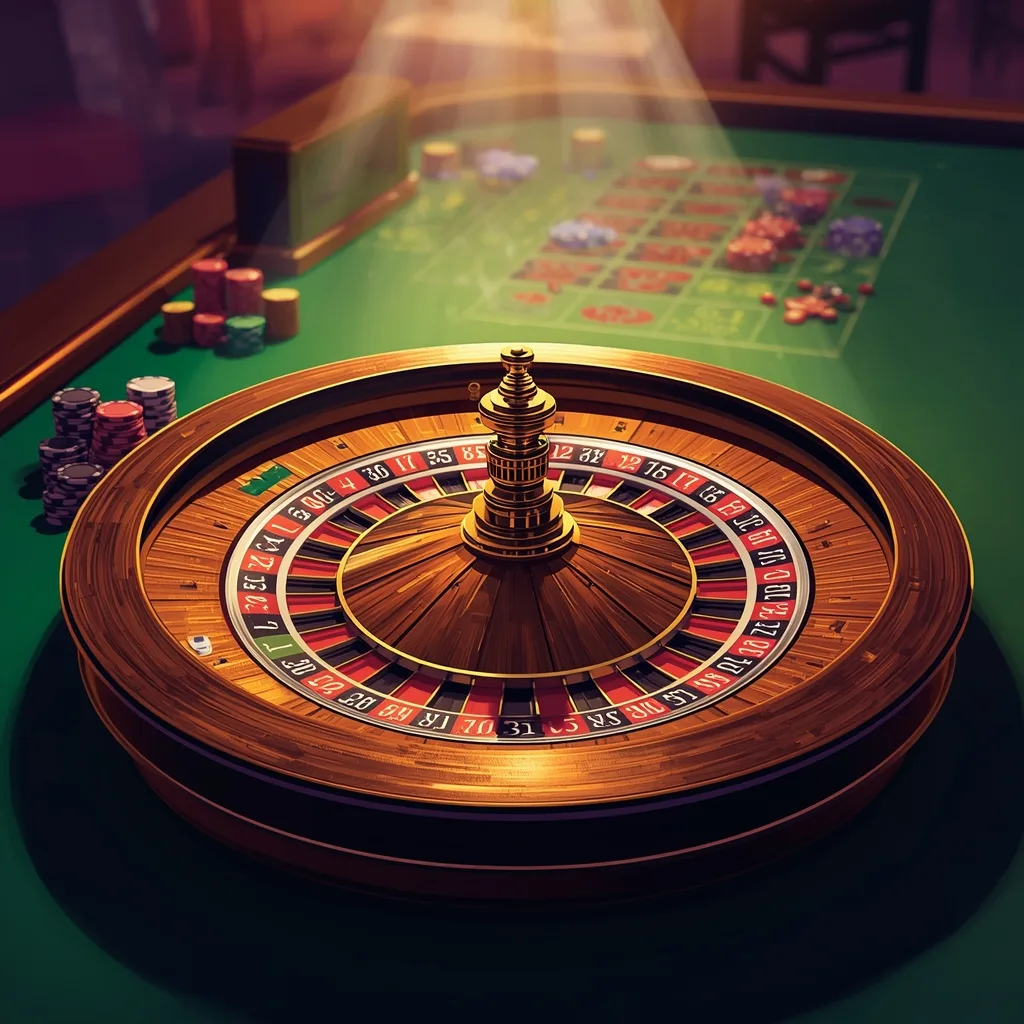
For over two hundred years roulette has slipped effortlessly from Parisian salons to the marble casinos of Monte Carlo and the neon glare of Las Vegas and Macau. Through all this, its fundamental design has scarcely changed. Yet the game’s long journey is lined with curious experiments as casinos have introduced odd rules and inventive twists to lure players or inject a fresh sense of spectacle. A handful of these variations were inspired, several were ill judged and a few were so baffling that they were withdrawn almost immediately.
Early experiments that tried to tame the house edge
In the nineteenth century the French and German markets saw a wave of experimental wheel configurations. Several casinos attempted to differentiate themselves by modifying the zero pockets. There were periods when the zero was removed entirely during promotional events, a tactic meant to lure players by offering near even odds. This might sound generous but it was short lived because casinos soon discovered that a low edge brought volatility that disrupted their ability to forecast revenue. As a historian once told me, the idea was commercially brave but mathematically reckless. The economic realities of the industry ensured that the zero returned almost as swiftly as it vanished.
Across the continent, operators tested a variety of side bets and non standard payout mechanisms. The Italian Riviera became an early laboratory for rules that boosted returns on specific numbers after consecutive spins. While these mechanics captured the imagination of high spirited players, they drew criticism from those who valued the game’s traditional structure. The divide proved so sharp that most establishments discontinued the trials before the end of the season.
American ambition and outlandish reinvention
When roulette reached the United States in the nineteenth and early twentieth centuries it encountered a competitive environment where operators were keen to make their mark. This produced some of the strangest wheels in history. The most infamous was the triple zero wheel which introduced an extra house advantage that few players spotted until too late. What fascinates me about this chapter is not merely the audacity but the fact that players tolerated it for years. In smaller frontier towns with limited entertainment options the game survived despite the punishing edge. Today these wheels are rare but they do still crop up, a reminder that not all innovations are designed with the customer in mind.
Another American experiment involved directional wheels that were spun clockwise for several rounds before switching to counter clockwise. Casinos argued that this reduced mechanical predictability. Players, however, found the practice distracting and even suspicious. Without clear evidence that it enhanced fairness, most establishments soon returned to the traditional single direction spin.

The strange pockets of casino history
Some of the most unusual rules emerged in smaller regional markets where operators had the freedom to try almost anything. Argentina hosted short lived wheels with half return mechanisms on even money bets, an idea that resembled the French la partage rule but with a local twist. In Eastern Europe certain casinos briefly introduced colourful wheel overlays that assigned special multipliers to pockets during festive seasons. These ideas were fleeting but they illustrate how malleable the game has been throughout its evolution. Even everyday experiences were influenced by these tweaks and it was during this period that players began encountering digital hybrids designed to blend tradition with innovation. These trials often fed back into the broader development of roulette as a modern global pastime.
The global quest for novelty
What stands out from studying these experiments is how determined casinos have been to capture public attention. In parts of Asia and Australia gaming floors introduced multi ball systems which released more than one ball onto the wheel. This drastically altered the pace of the game and created unexpected outcomes that traditional strategies could not anticipate. I encountered one operator who described it as an attempt to marry spectacle with mathematics. It had a devoted following for a time but the complexity proved to be its downfall. Most players simply preferred the clarity and familiarity that allowed them to play roulette in the same standard format found at UK casinos, which remained the anchor of the casino experience.
When unusual rules collide with player psychology
Casinos have always understood that gaming is as much emotional as it is mathematical. This is why rules rooted in superstition occasionally make their way into practice. In several markets players insisted that dealers rotate their position after a sequence of losses, a gesture believed to reset the luck of the table. Some venues indulged this tradition by formalising a rotation schedule. It had no influence on outcomes but it did appear to calm tensions during losing streaks. I have always been intrigued by the willingness of casinos to blend cultural beliefs with operational procedure. It demonstrates a level of flexibility that is often overlooked in discussions about the industry.
Legacy and lessons from the strangest variants
Many of these experimental rules have vanished but their legacy endures. They show that casinos have never been static environments. Operators constantly test the boundaries of what the public will accept, sometimes for profit, sometimes for novelty and occasionally for pure showmanship. What resonates with me is how the market ultimately decides which rules survive. Players gravitate towards clarity, familiarity and fairness. When innovations distract from these principles they tend to disappear.
These unusual roulette rules might appear to be little more than curiosities, but they reveal an important truth about the industry. Innovation will always have its moment, yet the game’s classic form continues to outshine every attempt to reinvent it. That staying power goes a long way towards explaining why roulette still commands such a prominent place on casino floors worldwide.