

Crypto has always had a weakness for fame. Put a token, an NFT drop, or an exchange next to a famous face, and suddenly the whole thing feels safer than it really is. That is the trick, and it worked for years. The celebrity crypto boom did not collapse because people stopped loving celebrities; it collapsed because regulators, courts, and angry retail buyers finally started asking the dull but essential questions: Who got paid? What exactly was promoted? Was the risk explained? And, in a few painfully expensive cases, did the product even exist in the form fans were promised?
After watching this space for years, I have learned one uncomfortable rule: the biggest scandals rarely start with technical details. They start with trust borrowed from someone’s public image. A boxer, a reality star, a football legend, a YouTuber, a retired NBA champion — each arrives with an audience that assumes there must be some due diligence behind the post. Very often, there is not. Below are seven of the loudest celebrity crypto scandals, not ranked by moral outrage, but by the size of the lesson they left behind.
1. Kim Kardashian and EthereumMax: The Instagram Post That Cost $1.26 Million
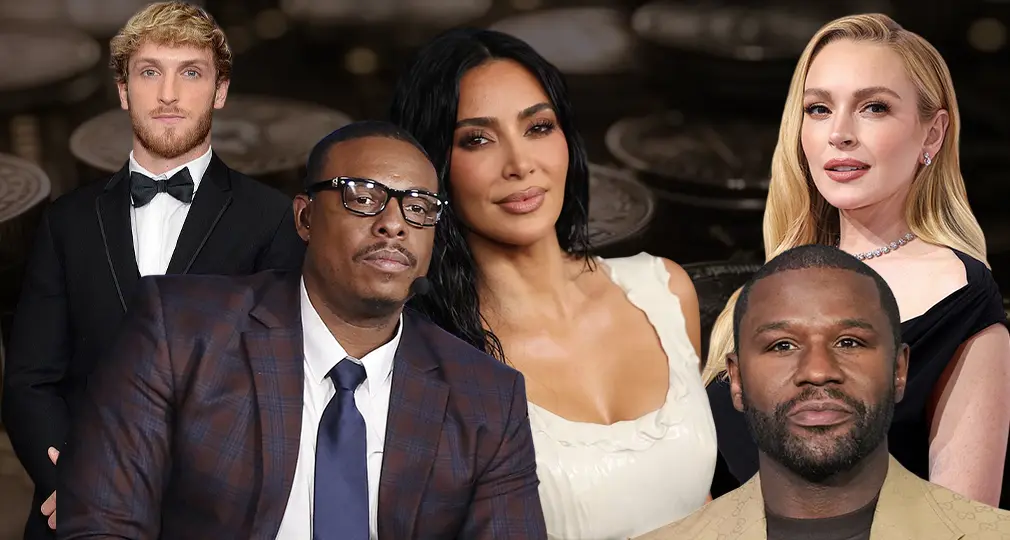
Kim Kardashian’s EthereumMax case remains the cleanest example of how one promotional post can become a regulatory headache. In June 2021, she posted about EMAX tokens to her enormous Instagram audience, presenting it as a crypto opportunity worth noticing. The problem was not simply that she promoted a token. The SEC said she failed to disclose that she had been paid $250,000 for the post, and in October 2022 she agreed to pay $1.26 million in penalties, disgorgement, and interest.
What made the case so memorable was its simplicity. No complex DeFi exploit, no mysterious bridge hack, no obscure tokenomics spreadsheet. Just a celebrity, a paid post, and missing disclosure. In practice, that is exactly where many retail investors get hurt: not in the white paper, which they never read, but in the emotional shortcut created by a familiar face. The practitioner’s lesson is blunt: if an influencer says “this is not financial advice” but does not clearly say they were paid, the risk is already flashing red.
2. FTX and the Celebrity Endorsement Machine: Fame Met a $32 Billion Collapse
The FTX scandal was bigger than celebrity marketing, of course, but the celebrity layer is what made the collapse feel personal to millions of ordinary users. Tom Brady, Gisele Bündchen, Stephen Curry, Larry David, Naomi Osaka, Shaquille O’Neal and others appeared in campaigns or public promotions connected to the exchange. When FTX imploded in November 2022, investors did not just ask what Sam Bankman-Fried had done. They also asked why so many famous people had helped make the platform look mainstream, polished, and safe.
There is a counterintuitive truth here that the industry still underestimates: a celebrity ad can make a risky platform feel less risky precisely because it says almost nothing technical. Larry David’s famous “don’t miss out” style campaign worked because it was funny, broad, and culturally fluent. That is powerful advertising. It is also dangerous when the product behind the joke is a financial platform holding customer funds. Later litigation against celebrity endorsers saw many claims narrowed or dismissed, but the reputational damage was already done.
3. Logan Paul and CryptoZoo: The NFT Game That Became a Case Study in Broken Promises
Logan Paul’s CryptoZoo is one of the most cited celebrity NFT scandals because it captured the exact flavor of the 2021 boom: cartoon animals, token mechanics, influencer hype, and a promise that sounded simple enough for anyone to understand. Buyers were told they were entering a game-like NFT ecosystem with breeding mechanics and earning potential. Instead, the project became notorious for delays, disputes, missing functionality, and angry holders who felt stranded after spending real money on assets tied to a product that did not arrive as expected.
The part professionals remember is not just the failure. Plenty of crypto products failed. What made CryptoZoo poisonous was the gap between presentation and delivery. When a creator with a massive audience sells an “almost ready” experience, buyers do not price it like a raw venture investment; they price it like something with momentum, team capacity, and a public figure’s accountability behind it. In January 2024, Paul offered a buyback-style refund program for certain NFT holders, but the controversy had already become a warning label for celebrity-led Web3 gaming.
4. Paul Pierce and EMAX: When Screenshots Make the Problem Worse
Paul Pierce’s EthereumMax case was messier than a simple missing-disclosure promotion. The SEC said the former NBA star failed to disclose that he had received more than $244,000 worth of EMAX tokens for promoting the asset on Twitter. It also said he posted misleading statements, including a screenshot suggesting large holdings and profits without making clear that his own holdings were much lower. In February 2023, Pierce agreed to pay about $1.4 million and accepted a three-year ban on promoting crypto asset securities.
This is one of those cases that makes compliance people wince, because it combines two mistakes: undisclosed compensation and performance theatre. In gambling and finance-adjacent marketing, screenshots are incredibly persuasive. They bypass skepticism. A user sees numbers, profit, momentum — and suddenly the promotion feels less like an ad and more like proof. The hidden mistake here is assuming that social media informality protects the promoter. It does not. A casual tweet can still become evidence.

5. Floyd Mayweather and DJ Khaled: The ICO Era’s First Celebrity Warning Shot
Before NFTs became the celebrity playground, there were ICOs. Floyd Mayweather Jr. and DJ Khaled were among the earliest big names to learn that paid crypto promotion could bring enforcement action. In 2018, the SEC charged both for failing to disclose payments they received for promoting initial coin offerings, including Centra Tech. Mayweather had promoted multiple ICOs and agreed to pay more than $600,000, while DJ Khaled agreed to pay more than $150,000. These were the SEC’s first celebrity touting cases involving ICOs.
Looking back, this case feels almost old-fashioned, but that is exactly why it matters. The industry was warned early. The rule was not hidden in some obscure corner of securities law: if you are paid to promote an investment, disclose it clearly. Yet the same pattern kept returning under new names — ICO, token, NFT, exchange partnership, yield product. The wrapper changed. The behavior did not.
6. Lindsay Lohan, Jake Paul, Akon and the TRX/BTT Promotion Case
In March 2023, the SEC charged Justin Sun and several associated companies, and it also charged eight celebrities for allegedly touting TRX and/or BTT without disclosing compensation. The celebrity list included Lindsay Lohan, Jake Paul, Soulja Boy, Austin Mahone, Kendra Lust, Lil Yachty, Ne-Yo and Akon. Most of the celebrities settled without admitting or denying the findings, while the broader case focused on unregistered offerings, alleged wash trading, and paid promotion. :contentReference[oaicite:7]{index=7}
This scandal is worth separating from the more famous single-name cases because it shows how industrialized celebrity crypto promotion had become. It was not one star making one questionable post. It was a whole cluster of recognizable names pushing the same ecosystem into different audiences. Anyone who has reviewed influencer campaigns knows how this happens: agencies package reach, promoters recycle language, and suddenly a financial product looks like a cultural trend. The public sees independent excitement. Behind the curtain, it may be coordinated distribution.
7. Cristiano Ronaldo and Binance NFTs: The Superstar Partnership That Turned Into a $1 Billion Lawsuit
Cristiano Ronaldo’s Binance NFT partnership became one of the biggest celebrity crypto legal stories because of the scale of the name attached to it. In 2023, Ronaldo faced a proposed class-action lawsuit in the United States seeking at least $1 billion, with plaintiffs alleging that his promotion of Binance and related NFTs helped draw users toward risky and allegedly unlawful crypto investments. The lawsuit targeted the influence of the campaign, not just the collectibles themselves.
The Ronaldo case also highlights a newer problem in celebrity crypto marketing: the blurred line between promoting a collectible and promoting the platform behind it. A fan may arrive for an NFT drop because it carries the athlete’s brand, then explore the exchange, tokens, leverage, staking, or other products nearby. That funnel is commercially brilliant. It is also legally sensitive. In mature markets, the key question is no longer “did the celebrity mention crypto?” but “what user behavior did the campaign reasonably encourage?”
What These Scandals Really Teach the Industry
The obvious lesson is disclosure, but that is only the entry-level version. The deeper lesson is that celebrity trust is a financial instrument when it is attached to crypto. It moves attention, compresses skepticism, and can make unfinished or risky products feel validated before they have earned that status. That is why the most damaging scandals were not always the technically most complex ones. They were the ones where fame made ordinary people feel they were late to something important.
For operators, affiliates, agencies, and influencers, the professional standard should now be painfully clear. Paid relationships must be disclosed in plain language. Risk warnings must be visible before the conversion point, not buried after it. Product claims need evidence. Screenshots, ROI language, “easy money” framing and vague lifestyle posts should be treated as regulatory explosives. And perhaps the most practical rule of all: if a campaign depends on the audience not asking how the celebrity got involved, the campaign is already rotten.
For users, the best defense is less glamorous but far more reliable. Ask who paid for the post, what the celebrity actually understands, whether the product has independent audits, what happens if withdrawals stop, and whether the upside is being shown more loudly than the downside. Crypto will always attract famous faces because attention is the most valuable currency in the market. The scandals above prove something colder: attention is not due diligence, and fame is not a safety certificate.
Read more: Best Trading Platform for Beginners