

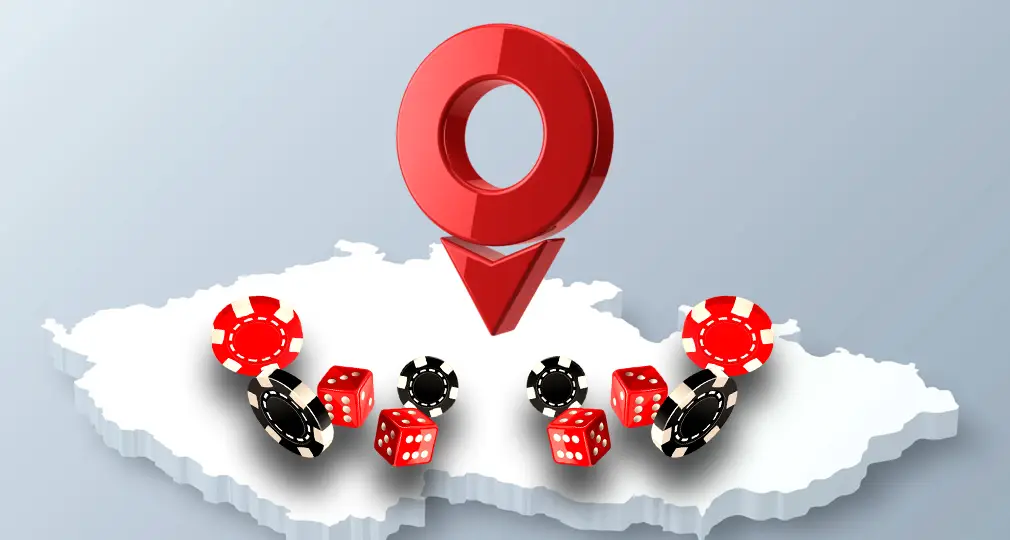
The Czech Republic remains one of the few European countries with a fully regulated gambling market. The main legislative act is the Act on Gambling (2017), which replaced the earlier “Lottery and Other Games Act” of 1990 and finally legalized online gambling.
The law covers lotteries, sports betting, totalisators, bingo, poker and other card games, slots and casino table games. Every operator offering these products must be licensed.
Certain restrictions protect players and limit problem gambling. Minors and individuals who receive social assistance or have been declared bankrupt are prohibited from playing. They are recorded in the national exclusion register, and operators must verify identities before allowing play both online and offline.
Regulation and Taxation
The Ministry of Finance is the primary regulator of the Czech gambling industry. It issues licences for both land-based and online operators and monitors their financial reporting and player protection measures. For land-based venues, a municipal permit is also required before operation.
To obtain a licence, companies must be registered within the EU, maintain transparent ownership structures, have minimum share capital of €2 million, and prove technical and financial capability to operate safely. Licences are issued for up to six years.
Taxation was revised in 2024 and 2025 to reflect game risk levels. Currently:
- Lotteries, bingo and table games — 30 % of GGR
- Fixed-odds betting — 25–30 % of GGR
- Technical games (slots, video lotteries) — 35 % of GGR
Additionally, the tax-free threshold for player winnings has been lowered from CZK 1 million to CZK 50 000. Authorities expect these changes to boost state revenue while discouraging risky forms of play.
Land-Based vs Online Segment
The Czech market continues to expand steadily. By the end of 2024, total bets reached nearly €39 billion — a 12.5 % increase compared to the previous year. Most of the turnover came from technical games such as slots and video lottery terminals (around €30 billion), followed by sports betting and lotteries.
Online gambling now accounts for more than half of the industry’s revenue. Operators are required to offer a Czech-language interface, enable responsible-gaming features such as self-exclusion and time limits, and implement a mandatory “cool-off button” that locks access for 48 hours at the player’s request.
Leading brands on the market include Tipsport, Fortuna, Sazka Group and Synot. While several international operators left the market in earlier years due to licensing complexities, many have since returned through local partnerships or acquisitions.

Municipal and Advertising Controls
From 2025, local governments have gained greater autonomy to regulate gambling within their jurisdictions. In Prague, for instance, most districts maintain a strict ban on electronic and mechanical slot machines, while live casinos remain legal in selected areas.
A major reform of advertising regulations also takes effect this year. The Czech Customs Administration now oversees gambling marketing nationwide to prevent illegal promotion and unlicensed affiliate activity. Operators must submit marketing plans in advance and avoid targeting vulnerable groups or minors.
Current Market Dynamics
Despite higher taxes, the Czech gambling sector remains profitable. Online growth is driven by mobile betting and live casino games, while slot machines continue to be the top-earning segment in land-based venues. The country is also home to King’s Casino Rozvadov, which hosts some of Europe’s largest poker events and remains a key tourism hub for players from Germany and Poland.
A national self-exclusion register introduced in 2020 has been further expanded in 2025 to include real-time data sharing between operators and banks, making it one of the most advanced responsible-gaming systems in Europe.
Outlook for 2025 and Beyond
- Continued digital growth as mobile apps and instant-play casino platforms dominate consumer behavior.
- Stricter controls on advertising and affiliate networks to ensure transparency and player protection.
- Expansion of licensed online casinos and sportsbooks driven by local investment.
- Rising interest in eSports betting and hybrid skill-based games.
- Stable regulatory environment that balances player safety with industry growth.
The Czech Republic’s approach in 2025 shows that clear rules, controlled tax policy and technological oversight can create a sustainable gambling market — one that attracts investors, protects players and sets a benchmark for Central Europe.
Read more: Cash advance at casino with debit card