


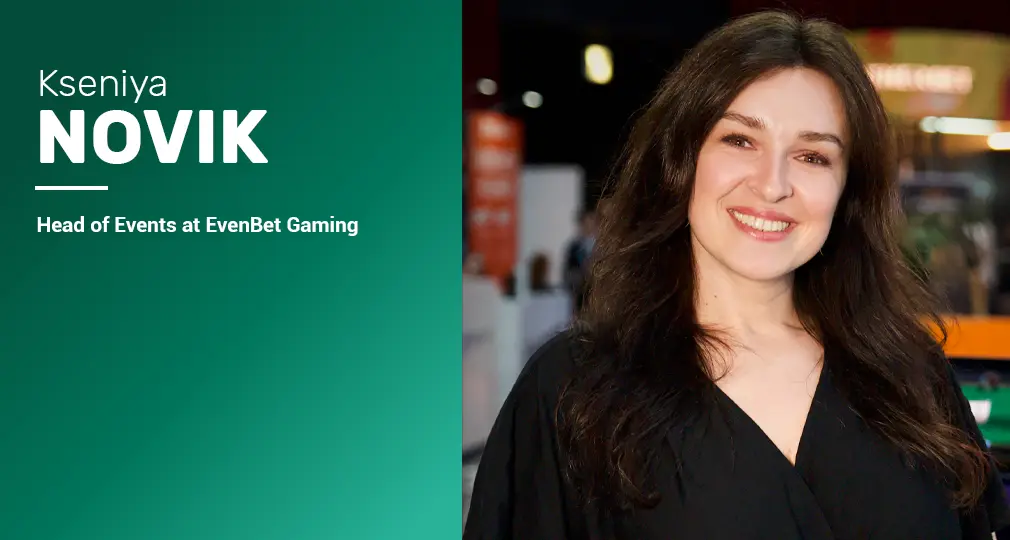
In this interview, with Kseniya Novik, Head of Events at EvenBet Gaming, we explore the strategy, planning, and coordination behind a successful presence at major industry events such as iGB L!VE. From developing creative concepts and defining event objectives to measuring performance through commercial, brand, and product metrics, the discussion provides a behind-the-scenes look at modern event marketing in the iGaming industry.
When do you typically start preparing for a major event like iGB London, and what are the first steps?
Preparation for major events usually starts around 4–6 months in advance, depending on the scale of the project. However, booking the stand takes place much earlier — almost a year ahead, right after the previous event wraps up. The first step is always defining our core business goals: whether that’s lead generation, boosting brand awareness, launching a new product, strengthening existing partnerships, or breaking into new markets. Once these goals are aligned, we start working on the concept and stand project, managing the entire process in-house. Since we work with our products and brand on a daily basis, we clearly understand how many meeting zones, demo devices, or information screens are required, as well as from which sides visitors will approach the stand.Simultaneously, we collaborate with sales, product, and marketing teams to align on priorities, pinpoint target audiences, and craft our key messaging.
As for the upcoming iGB L!VE 2026, the preparation followed the exact steps I described above, and we’re fully ready for the event. Without giving too much away, I’ll just say that our creative concept is inspired by the true English spirit. We invite everyone to visit our stand, number N40, and see it for themselves!
How do you define the goals and success metrics for attending an event? What makes iGB London different from other events you attend, in terms of preparation?
We define success by splitting goals into commercial, brand, and product objectives. Typical commercial goals include the number of leads, CPC, CPL, CPQL, and the overall conversion rate. We usually evaluate ROI at a later stage, once the leads have gone through the entire sales funnel. For brand goals, we track brand awareness, social media engagement, the number of interviews, and customer insights. If we talk about product goals, we usually measure feedback on our solutions from both leads and existing clients.
As for iGB Live, this is one of the biggest summer events in the industry and takes place in London — home to a huge number of media companies and many of our partners. For us, it’s a great opportunity to increase our visibility in the industry, present our products, and meet with partners and clients before the long summer break. That’s why our Marketing Communications team starts preparations for iGB especially early. Interview and podcast scheduling, speaker selection, and PR activity planning often begin at the same time as concept development — sometimes even earlier.
How do you coordinate between different teams (marketing, sales, product) during preparation?
Once the concept, stand design, and communication channels are finalized, I present them to all relevant department heads – such as the Head of Sales and Marketing leads – so everyone is aligned on the overall plan. After that, responsibilities are assigned within the marketing team. We plan landing pages, merchandise, ad campaigns, and stand visuals. Each lead coordinates with other departments throughout the preparation process within their area of responsibility. For example, the product team helps define key messages for our content, while the design team prepares required visuals, and so on.
We also align on event goals with the Sales team, promote their participation on both corporate and personal social media channels, and help them prepare for the event. For the event crew, I create a centralized chat where they can access all necessary information, documents, and answers to their questions during the preparation stage. Right before the event, I launch a Telegram chat for real-time on-site coordination. All of this ensures internal alignment and keeps the preparation process running smoothly.
What tools or systems do you use to manage event planning and communication?
In addition to the tools provided by the organizers, such as event platforms, we use a range of communication and project management tools throughout the preparation process. Our main communication channels are Microsoft Teams, Telegram, WhatsApp, and email. During the final stages of preparation, we often switch to messengers to maintain faster and real-time communication. For planning and coordination, we use project management systems, while tools such as Figma support the stand development and marketing materials. Meanwhile, Microsoft Office remains our primary tool for planning, reporting, and documentation.
How do you handle last-minute changes or unexpected challenges? What kind of challenges could these be?
We always maintain a backup plan and react quickly when unexpected issues arise. Most of the unexpected challenges relate to logistics or customs. Customs issues, in countries that are new to us, can be unpredictable. We always try to resolve these situations immediately or find an alternative solution. For instance, if necessary, we can produce materials locally on-site.
On the logistics side, we’ve experienced shipments being delayed or even lost by delivery services. While we always resolve these issues, they require significant additional time and effort. For instance, iGB organizers provide a service where merchandise can be stored and delivered directly to the stand, which significantly simplifies the process.
How do you decide on messaging and visuals for the stand? What elements are essential for creating an engaging and visually appealing stand? Do you customize stand design for different events or regions?
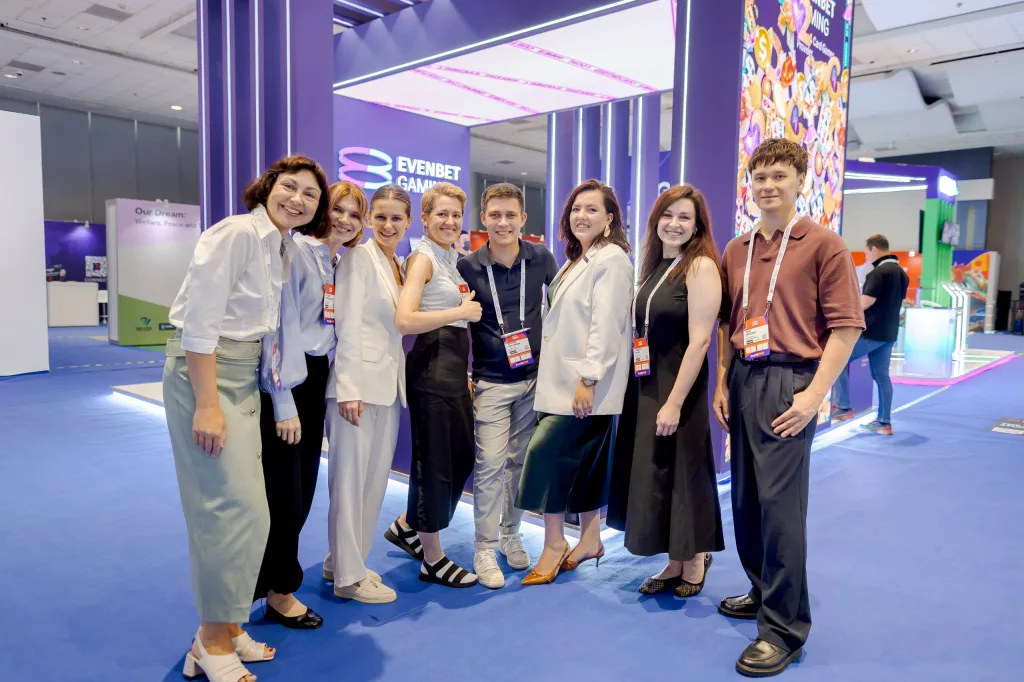
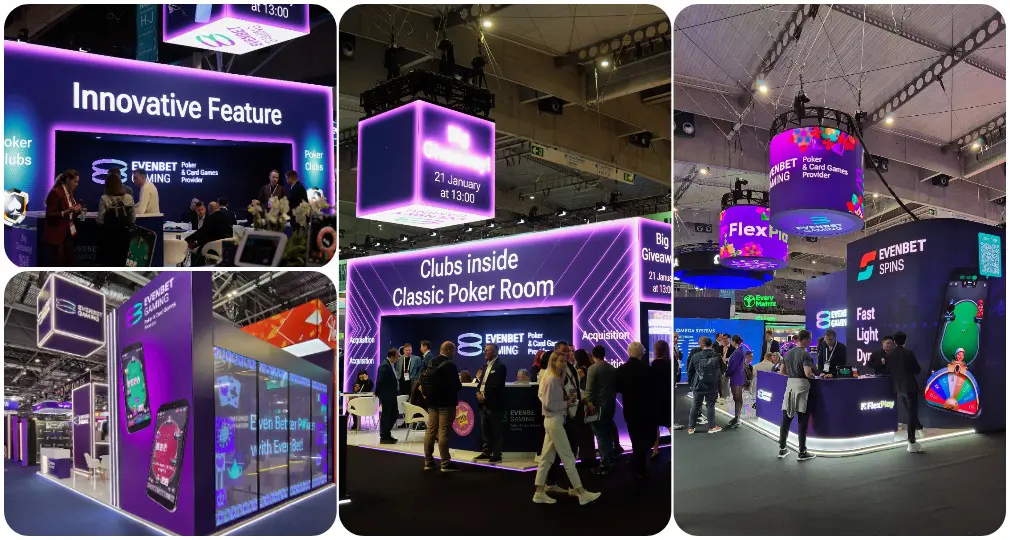
We define the stand concept and key messaging based on the specific product, key feature, or brand direction we want to promote at a particular event. When developing the visual identity, my main goal is to make the brand visible, recognizable, and attractive to the target audience. For us, several elements are essential. First, I always incorporate screens because dynamic content attracts more attention than static visuals and allows us to showcase our products effectively. Second, I utilize a suspended structure above the stand to improve visibility and helping visitors find us easily even in a crowded exhibition hall.
Functionality is another top priority. It should include comfortable meeting zones, a welcome counter, and, depending on the stand size, additional areas such as a bar or storage room. I don’t just customize our stand designs for each event — I build a completely new stand concept and construction that matches our messaging, objectives, and business goals.
How do you attract the right audience to your stand during a busy event like iGB? What strategies work best for engaging visitors and starting meaningful conversations?
All major exhibitions, such as iGB, require a carefully crafted strategy and an individualized approach. The first critical factor is always the stand location. Right after the previous exhibition ends, we work to secure a spot near the main attendee flow or close to high-traffic areas, such as lounges and activity zones. Next, we leverage dynamic product presentations and creative stand design to attract attention. We also launch brand and team promotions well in advance, using online channels to introduce our presence and invite potential clients to our stand. This enables our sales team to pre-book meetings before the event even starts.
To engage visitors, we use high-impact sponsorship opportunities to attract the target audience to our stand. For instance, we often host poker tournaments. These not only boost brand awareness but also allow us to build a vibrant community, helping people network and enjoy their time in a more informal setting. As a result, this creates a powerful, direct association between poker and our brand. We want people to have the core message: “If you need poker, you need EvenBet Gaming.”
Finally, we integrate interactive experiences at the stand, tailored to the specific market and audience. Whether it’s games, interactive activities, or a custom photo zone, these elements encourage visitors to engage with us and significantly improve brand recognition.
How do you prepare your team to communicate effectively with different types of visitors?
Before each event, we make sure the entire team clearly understands the key messages and strategic goals of our participation.
The marketing team provides supporting materials, product presentations, offers, and information about new features and products. We also segment our product portfolio, so that sales managers can easily adapt their communication depending on the visitor profiles and business objectives. In addition, I organize internal briefings prior to the event, where we discuss key talking points, product updates, and event goals. During the exhibition, the team is fully prepared to deliver live product demonstrations. We also ensure that technical specialists are on hand to step in and handle complex, deep-dive technical questions when needed. This approach guarantees that every visitor receives highly personalized, relevant information, ensuring an exceptional overall brand experience.
What pre-event marketing activities do you run to maximize visibility?
We launch our promotional campaigns a few months before the exhibition. The exact mix of activities depends on the event goals, but we usually focus on brand promotion, lead generation, and increasing awareness of our products and services. We use ad campaigns, our website, social media, event platforms, industry media, and partner channels to announce our participation, promote our team members, and invite potential clients to visit our stand. If we have experts speaking on panel discussions, we actively promote their sessions to position our team as industry experts. In addition, we prepare targeted product announcements, share information about new features, and promote any activities we plan to host during the event.
Ultimately, one of the main goals of our pre-event marketing is to drive meeting bookings for the sales team well before the exhibition starts, ensuring that visitors are already familiar with our brand the moment they arrive at the stand.
Do you pre-schedule meetings, or rely more on spontaneous interactions? How do you capture and qualify leads during the event?
We heavily emphasize pre-scheduling meetings to maximize our on-site efficiency. Through social media, event platforms, the official show app, direct outreach, and targeted promotional activities, we connect with potential clients and partners to fill our calendars in advance. At the same time, spontaneous interactions remain crucial, especially at side events. Even with a fully booked schedule, exhibitions create many unexpected networking opportunities, so our managers always keep a few slots available for new leads. When it comes to lead capture, it depends on the event and the available tools. For instance, iGB organizers provide the SmartScan, which makes the process much easier. All you have to do is scan a visitor’s badge using your smartphone.
Lead qualification starts during the conversation. Our team tries to understand the visitor’s business, interests, market, and potential needs. This helps them determine whether the contact is a potential client or partner. After that, managers add all qualified leads to the CRM and continue working with them after the event.
What happens after the event– how do you evaluate success and ROI? How do insights from one event influence preparation for the next one?
After every event, we conduct a detailed post-event analysis and retrospective with the team. First, we collect internal feedback. I developed a dedicated feedback form that every team member completes after the exhibition. This helps us understand what worked well, what could be improved, and how effective our on-site processes were. Second, we evaluate the commercial performance of the event. We analyze the number of meetings, leads, qualified leads, deals, and potential revenue generated through dedicated reporting forms and our CRM. Based on this data, we calculate key metrics such as CPC, CPL, CPQL, CPD, and overall ROI. We also analyze the entire sales funnel to understand conversion rates and lead quality.
Finally, we evaluate the event from a brand and PR perspective. We review media coverage, brand mentions, interviews, panel discussions, and the performance of any side events we organized or sponsored. For us, a successful event is not only about leads and revenue. It is also about amplifying brand awareness, strengthening our market position, and reinforcing our reputation as experts in the industry. The insights we gather after each event help us improve future participation, optimize budgets, and make smarter strategic decisions for upcoming exhibitions.