


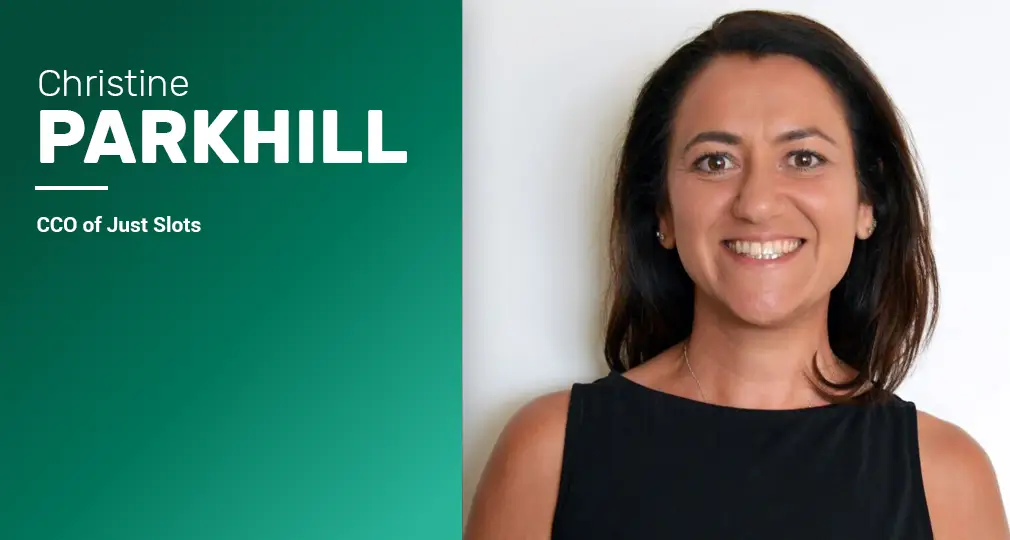
GBC Time has interviewed – Christine Parkhill, CCO at Just Slots, a gaming software development company made up of true industry experts, with a mission to deliver real value to the broader gaming ecosystem.
Just Slots is on track to release 10 games this year. How do you maintain quality while scaling output so quickly?
We’ve invested heavily on in-house tools that allow the team to collaborate better, testing different options and moving quickly without losing focus on quality. We also rely a lot on data from our previous releases and having access to in-depth player metrics means we can see what resonates, what doesn’t, and feed those insights straight back into development. For us, every game has to have a clear reason for release, something that adds value for players, not just another title to hit a number. On top of that, a close relationship with the operators provides constant feedback that helps us refine what we do and ensure each release is more polished than the last.
How do you decide which game concepts are worth developing versus shelving?
We always start with the player. If I can’t imagine how the player is going to enjoy and connect with an idea, it probably won’t make the cut. I’m lucky to work with a team that genuinely loves playing and making slots, so their enthusiasm is a big part of the decision making process. Of course, we also need to balance creativity with practical considerations like complexity, roadmap balance, current trends, and what operators and affiliates are asking for. Sometimes a concept feels exciting but doesn’t fit the moment, so we’ll put it on hold until the timing is right.
What’s your approach to balancing creativity with commercial performance when greenlighting titles?
As a relatively new supplier, we know it is important to have consistent releases and a strong presence in casino lobbies. This means commercial performance has to be considered. That said, I believe that good games are naturally the ones that perform well. If you have a strong product team and commercial team working together, supported by a reliable technical framework, the different sides don’t have to be in conflict. I don’t really see it as creativity versus commerciality; it’s about building games that are fun, engaging and technically solid, because that’s what drives both player enjoyment and business success.
In such a saturated market, what’s your secret to making a strong first impression with both operators and players?
The market has never been more competitive, so I focus on the basics that sometimes get overlooked. Solid technology, reliability and delivering games on time are absolutely critical. We put a lot of effort into UX and UI because if a game isn’t intuitive and smooth, players will move on quickly. Having a very experienced team also helps as we know how to earn operator trust by being dependable. When it comes to players, we look closely at the key KPIs that matter to them, and we design games with those in mind. It’s that combination of trust, execution and focus on the player that makes a strong first impression.
How does player feedback shape your roadmap? Do you iterate quickly based on data, or plan long-term?
For me, it’s not one or the other, it’s both. We constantly use player data to refine our games and our framework allows us to iterate quickly. If something isn’t working, we can adjust and improve on the fly. At the same time, I believe in having a long-term vision. We’ve got some very creative people on the team who love coming up with unique concepts and those bigger ideas need time to breathe and develop. So the roadmap is always a mix of a quick iteration based on real-time data alongside longer-term plans that let us explore more ambitious and innovative mechanics and themes.
Your partnerships with Hub88 and Stake.com seem to have been major milestones. How do these collaborations influence game design or strategy?
Working closely with operators is one of the best ways to understand players and deliver successful games. Partnerships like these allow us to release to a wider audience much faster, which gives us invaluable data straight away. That early feedback means we can learn and adapt quickly. Another big advantage is the honesty of our partners who aren’t afraid to tell us if something isn’t hitting the mark, and I value that immensely. It keeps us sharp and ensures we’re building games that not only we’re proud of, but that players genuinely want to engage with.
Are there plans to secure deals with new customers in the near future, and if so, what markets or partners are you targeting?
Yes, absolutely. We’re working on some exciting new partnerships right now, but we’re going to keep the details under wraps until the big day!
How do you ensure your games stand out on partner platforms that host hundreds of titles?
There are so many elements that go into making a game stand out. It starts with the concept, something that feels fresh and engaging. Then it’s about the art and animation, which give the game its personality, along with mechanics and math that create balance and excitement. All this needs to be supported by a strong launch – exposure is key. Our commercial team works tirelessly to make sure our marketing highlights what’s unique about each title. I focus on every detail, because it’s the combination of all these things that ensures a game shines in a crowded lobby.[1]
How do you see emerging technologies like AI, machine learning, or blockchain affecting your approach to slots in the near future?
I think AI is a fantastic tool, but it has to be used carefully. We’re embracing it to support our teams, whether that’s streamlining workflows or providing new ways to analyse data. But these games are built for real people, so experienced people need to be the ones guiding and shaping how those tools are used. AI should enhance creativity and efficiency, not replace the human judgment that makes games fun.
What’s your philosophy when it comes to experimenting with themes or mechanics that haven’t been tried before?
I think balance is everything. If we never experimented, the industry would become very boring very quickly. At the same time, players usually enjoy something familiar that sparks nostalgia. So we plan the roadmap with that in mind, mixing new mechanics with more classic features, and combining themes carefully. When you get that balance right, you can offer players something exciting and fresh without alienating them.
How do you see slot games evolving in the next 5–10 years?
It’s always hard to predict, but I do think multiplayer and social experiences will become more popular. Whether that’s multiplayer slots, easier ways to share wins or features like combined wallets, players will increasingly look for ways to make gaming a group activity. I also believe regulation will continue to shape the industry more and more, so we’ll need to stay close to those developments. But ultimately, the core purpose of slots is for people to have a bit of fun, and that’s where we’ll keep our focus.
Read More: Casino Games Aggregator