

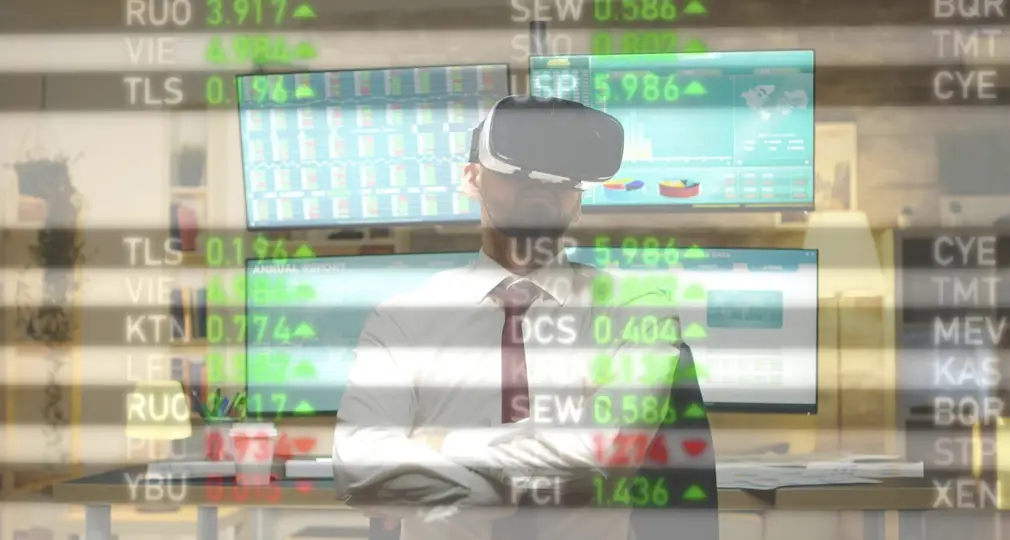
A stock exchange is a financial institution that ensures the continuous operation of an organized securities market, enabling the trading of financial instruments such as stocks, bonds, and derivatives. This article explores how to create a stock exchange in modern Ukraine and the European Union, what legal requirements must be met, and what goals such institutions pursue today.
Did you know?
In the 19th and early 20th centuries, Ukraine had four commodity and stock exchanges — in Kyiv, Odesa, Lviv, and Kharkiv.
The Current State of the Ukrainian Securities Market
As of 2025, Ukraine’s securities market remains underdeveloped, although it continues to evolve thanks to digital reforms and integration with European standards.
Today, the country has several active players, including:
- PFTS (First Securities Trading System) – founded in 1997, one of the country’s largest exchanges.
- Ukrainian Exchange (UX) – a key competitor, focusing on electronic trading and rapid transactions.
- Kyiv International Stock Exchange (KISE) – supports derivatives and innovative fintech tools.
According to the Agency for the Development of Stock Market Infrastructure, 11 registered stock exchanges currently operate in Ukraine. However, only a few conduct significant trading volumes, as the majority of financial activity is still concentrated in bank and crypto markets.
The Procedure for Establishing a Stock Exchange in Ukraine
The most common organizational model of a stock exchange is a private joint-stock company that unites equal members who purchase trading seats on the exchange.
A stock exchange is not a commercial enterprise — its profits are formed from:
- sale of shares to members,
- annual membership fees,
- exchange commissions and penalties.
These funds are fully reinvested in operational costs, infrastructure, and development — profits are not distributed among participants.
Step-by-Step Process:
- Legal registration in accordance with the Law of Ukraine “On State Registration of Legal Entities and Individual Entrepreneurs.”
- Obtaining a license from the National Securities and Stock Market Commission (NSSMC).
- Approval of exchange rules, including transparency policies, trading procedures, and sanctions for violations.
- Formation of a management structure – supervisory board, compliance unit, and trading administration.
Modern Ukrainian exchanges also adopt EU standards for market transparency, cybersecurity, and investor protection as part of the country’s movement toward European financial integration.
Legal Requirements: Who Can Establish a Stock Exchange
A stock exchange must be founded by at least 20 licensed securities traders. Each founder’s share cannot exceed 5% of the authorized capital.
If the number of members falls below 20, the NSSMC may suspend or revoke the exchange’s license.
Membership Rules:
- Only licensed securities traders can be members.
- Members must comply with the exchange’s regulations and ensure transparency in all transactions.
- If a trader’s license is revoked, their membership is automatically suspended until it is reinstated.
All members have equal voting rights in managing and shaping the exchange’s operational policies.
The Purpose and Role of a Stock Exchange
The main goal of a stock exchange is to facilitate efficient and transparent trading of securities. For investors, it provides a mechanism to exchange financial assets for capital; for issuers, it creates access to investment and liquidity.
Key Objectives:
- Establishing fair pricing for securities through supply and demand.
- Providing liquidity and quick asset reallocation opportunities.
- Enhancing economic growth by channeling capital into promising industries.
- Supporting innovation and technology sectors through investment flow.
By publishing regular market data and stock indices, exchanges make it possible to evaluate the financial health of companies, industries, and the economy overall. This helps investors make informed decisions and stimulates long-term capital movement toward high-potential areas.
During times of economic instability, the stock market serves as a stabilizer — investments in companies resilient to financial shocks act as a hedge against inflation and currency depreciation.
Trends and Innovations in 2025
Modern stock exchanges are increasingly becoming digital ecosystems, combining traditional instruments with blockchain, tokenized assets, and AI-driven analytics.
Key trends include:
- Integration with EU markets via MiFID II standards.
- Introduction of ESG-index trading (environmental, social, and governance metrics).
- Automation of settlements and clearing through distributed ledger technologies.
- Retail investor expansion via mobile apps and micro-investing platforms.
Additionally, hybrid exchanges are emerging — offering simultaneous trading of securities, commodities, and cryptocurrencies, bridging traditional finance and Web3.
Outlook for Ukraine and Europe
Ukraine aims to create a unified national trading hub compatible with European exchanges by 2027. The goal is to attract foreign investors, increase market liquidity, and improve access for small and medium-sized enterprises (SMEs).
Across Europe, stock exchanges like Euronext, Deutsche Börse, and Warsaw Stock Exchange (WSE) are actively implementing AI-based regulation and cross-border digital bonds.
For Ukraine, aligning with European practices means adopting transparent corporate governance, real-time transaction monitoring, and investor protection frameworks similar to those used in Paris and Frankfurt.
Conclusion
Creating a stock exchange in 2025 is no longer just about organizing a trading floor — it’s about building a modern financial ecosystem that supports transparency, innovation, and integration into the global economy.
Stock exchanges act as economic barometers, reflecting the health and confidence of entire industries. As Ukraine moves toward full synchronization with European financial infrastructure, developing a strong, transparent, and technologically advanced exchange system is not just a goal — it’s a strategic necessity for economic recovery and growth.
Read more: Open Banking for Gambling