


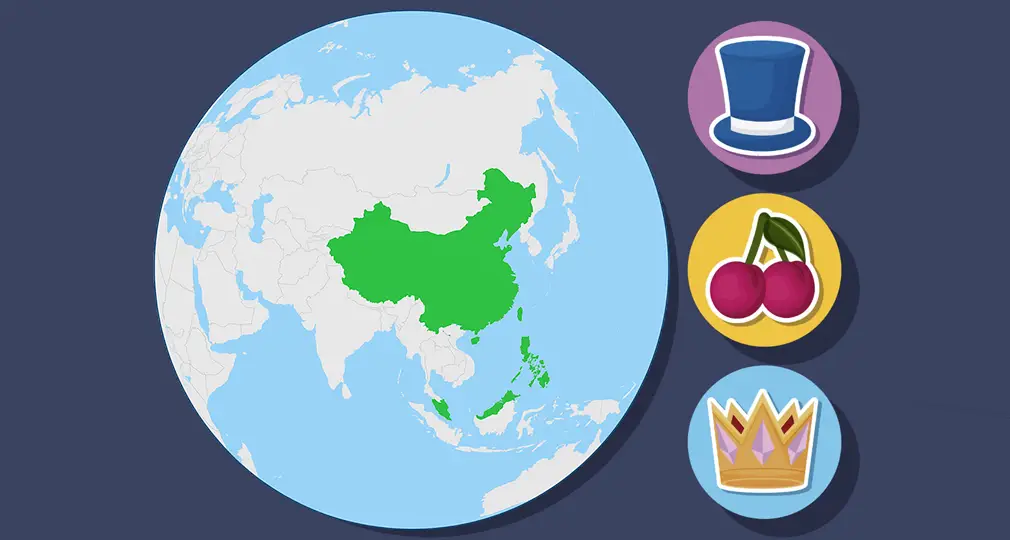
Asia remains one of the most attractive yet challenging regions for global gambling operators. Home to 60% of the world’s population and many fast-growing economies, the continent offers enormous potential for the gambling industry. However, strict regulation and conservative government attitudes continue to limit market access. Despite these challenges, recent years have brought clear signs of liberalization, particularly in the land-based sector, with some countries cautiously moving toward online regulation.
China
Gambling is strictly prohibited on the Chinese mainland, apart from state-run lotteries. The government remains aggressive in fighting illegal online platforms and cross-border gambling networks, with thousands of websites blocked and operators prosecuted each year.
Macau
Often called the “Las Vegas of Asia,” Macau remains the premier hub for luxury casinos, focused primarily on high rollers. However, all forms of online gambling remain illegal, and authorities continue to crack down on offshore operators.
Hong Kong
Hong Kong allows sports betting, horse racing, and lotteries. Casinos are only legal offshore, operating on cruise ships once they leave local waters. Online gambling platforms remain illegal.
India
India regulates gambling at the state level, resulting in a fragmented market. In 2025, however, the national government introduced the Promotion and Regulation of Online Gaming Bill, which established a federal framework for regulating online gaming and betting, alongside a new national authority.
Some states continue to ban online gambling, while others allow skill-based games like poker and fantasy sports under local licenses. Floating casinos remain legal in Goa, and several regions, such as Sikkim and Nagaland, have begun licensing limited forms of online betting.
Thailand
For decades, Thailand permitted only state lotteries and horse racing. But in 2025, the government took a historic step by approving legislation to legalize casinos within large entertainment complexes. The law introduces strict conditions for local players, including entrance fees and financial requirements, while aiming to attract international tourism. Online gambling may be considered for legalization in the coming years.
Philippines
The Philippines operates under one of the most complex gambling frameworks in Asia. Two regulators oversee the sector:
- PAGCOR, which manages domestic casinos, betting shops, and online platforms for locals.
- CEZA, which historically licensed offshore operators but has faced restrictions in recent years.
The government has tightened oversight of offshore operators while lowering fees for local licensees to encourage regulated activity. At the same time, authorities have warned against a surge of illegal online gambling promoted through social media.
Uzbekistan
In January 2025, Uzbekistan became the latest country in Asia to legalize online gambling. The new system, overseen by the National Agency for Prospective Projects, introduces strict licensing requirements, including high capital thresholds, advanced player protection tools, and centralized monitoring. This reform positions Uzbekistan as a regulatory pioneer in Central Asia.

Japan
Casinos became legal in Japan in 2018, but only in the form of integrated resorts. Locals face restrictions on entry, such as a fee of 6,000 yen and limits on weekly visits. While online gambling remains prohibited, regulators continue to expand the framework for casino operations, inspired by the Singaporean model.
South Korea
South Korea maintains a tough stance on gambling. Land-based casinos are restricted to foreign visitors, with the exception of Kangwon Land, which also admits local players. Online gambling is illegal, and violators face harsh penalties, including prison terms.
Singapore
Singapore legalized integrated resort casinos in 2005 and continues to maintain one of the most controlled gambling environments in Asia. Only two licensed operators are allowed, with high entry fees for local players designed to limit problem gambling. Online gambling is heavily restricted, with limited exceptions.
Vietnam and Cambodia
Vietnam allows land-based betting and casinos in certain tourist areas, and pilot projects for local participation are underway. Online gambling remains banned.
Cambodia previously experimented with online casino licensing but reversed course by 2020. Today, the country focuses on land-based casinos catering mainly to foreign tourists, with new integrated resorts being developed under a modern regulatory framework.
Malaysia and Taiwan
- Malaysia: Gambling is prohibited for citizens due to religious restrictions, but casinos and betting services remain accessible to foreign visitors.
- Taiwan: Almost all gambling is banned, with the sole exception of state lotteries. Illegal operators face severe fines and criminal prosecution.
Outlook for Asian Gambling Markets
While Asia is still one of the most restrictive regions for gambling, the landscape is evolving. The rise of regulated integrated resorts in countries like Japan, Singapore, and now Thailand shows a growing recognition of the industry’s economic potential. Uzbekistan has emerged as a trailblazer in online gambling regulation, while India is finally moving toward a unified national framework.
The main trends for 2025 include:
- Expansion of land-based integrated resorts to attract tourism.
- Gradual acceptance of online gambling regulation in selected countries.
- Strong enforcement against illegal platforms, especially in China and the Philippines.
- Increased focus on responsible gambling measures and player protection across the region.
Read more: Finance affiliate programs UK