


Honestly, bingo did not walk into pop culture wearing a tuxedo and asking for permission. It came in louder, cheaper, messier, with paper cards, shouted numbers, lucky charms, half-cold drinks, and someone at the back yelling “one more!” like rent depended on it. The funny bit is that a game built around numbered balls somehow became a social code, a comedy device, a TV-night punchline, a charity engine, and now even a nightlife format. Well, actually, that is why bingo still sticks: it is simple enough for a first-timer, but emotionally it plays like a final table when you are one number away.
From Lottery Roots to the Name Everyone Knows
Backstory matters here, because bingo did not just appear in a neon hall one Friday night. The older roots usually get traced back to lottery-style number games in Europe, while the modern American version is tied to Edwin S. Lowe in 1929, after he saw a carnival game called “Beano.” Players used beans to cover numbers, which is gloriously low-tech and, honestly, kind of perfect. Then the name “bingo” stuck, and that tiny rename was a marketing jackpot – short, shoutable, memorable, bang, done.
Why the Game Was Built for Mass Culture
Simple rules made bingo travel faster than most gambling-style games, because nobody needed a manual the size of a mortgage contract. You get a card, numbers are called, you mark them, and the room slowly turns into a pressure cooker. For example, roulette looks elegant, poker looks clever, blackjack looks disciplined, but bingo looks communal, and that matters. The whole table, hall, or online chat can feel the same countdown, and when someone wins, everybody reacts – love, hate, groans, applause, the full circus.
- Low entry barrier: new players understand the basics in under 2 minutes.
- Social tension: everyone hears the same call and waits for the same lucky hit.
- Cheap entertainment: many formats work with small stakes, which keeps the door open.
- Built-in drama: being one number away is basically a tiny soap opera.
- Easy parody: number calls, old halls, dabbers, and rituals are perfect comedy material.
The British Bingo Hall Boom
Britain turned bingo into something bigger than a game, especially after the Gaming Act 1960 opened the door for licensed commercial play. Old cinemas were converted into bingo halls, and that detail is pure pop-culture poetry: one mass entertainment format moved out, another one moved in. In the 1960s and 1970s, the bingo hall became a night out, not just a place to chase a line or full house. Between us, that is the magic – people came for the prize, stayed for the ritual, and remembered the caller more than half the numbers.
| Era | Pop-culture role | Typical image | Why it worked |
|---|---|---|---|
| 1920s-1930s | Carnival and fundraiser game | Beans, cards, small prizes | Easy to run and easy to teach |
| 1960s-1970s | Mass night-out entertainment | Large halls, callers, packed rooms | Affordable, social, loud, local |
| 1980s-1990s | TV joke and community stereotype | Dabbers, regulars, lucky seats | Recognisable instantly |
| 2000s-2010s | Online and themed revival | Chat rooms, apps, drag bingo | Old format, new packaging |
| 2020s | Experiential nightlife | Raves, brunches, TikTok clips | Participatory fun beats passive watching |
Television Loved Bingo Because It Looked Human
Television did not need to explain bingo for long, and that is a huge advantage on screen. A card, a caller, a nervous player, one missing number – the audience gets it immediately, no tutorial, no diagrams, no slow academic nonsense. Sitcoms used bingo halls because they showed class, community, routine, luck, gossip, boredom, and sudden chaos in one room. Anyway, a bingo scene can be funny before anyone even wins, because the tension is already baked into the chairs.
Comedy Turned Bingo Into a Shortcut
Comedians love shortcuts, and bingo gives them a full box of them. The caller’s rhythm, the weird number nicknames, the suspiciously serious regulars, the lucky pens, the death-stare when someone talks during a call – it is all material. Well, actually, bingo became funny because people take it seriously, and serious people in low-stakes chaos are comedy gold. That contrast is insane: tiny prize, massive emotion, and one player acting like a missed number just ruined the stock market.
Music, Nightlife, and the Reinvention Problem
Nightlife needed something more interactive than standing around with a drink, and bingo walked in like an old hustler with new shoes. Events such as party bingo, rave bingo, brunch bingo, and music bingo changed the atmosphere from quiet hall to full-volume participation. Bongo’s Bingo, for example, mixed bingo with dancing, prizes, crowd games, and loud nostalgic tracks, pulling millions of attendees into a format that barely resembles grandma’s Tuesday night. This is cool because the core game stayed simple, while the wrapper became pure chaos with lights on.
Drag Bingo and Charity Culture
Drag bingo deserves its own seat at the table, because it turned the game into performance, fundraising, and community theatre. The format became especially visible in LGBTQ+ charity spaces, where hosts could blend jokes, glamour, camp timing, and donation energy without making the event feel stiff. A good drag bingo host does not just call numbers; they control the room, roast the players, sell the stakes, and keep the tension alive. Honestly, when bingo gets a performer with microphone control, it stops being a number game and becomes a live show with cards attached.
- Charity nights: bingo works well because tickets, raffles, and small prizes are easy to organise.
- Drag hosting: the caller becomes the main attraction, not just background staff.
- Community pull: people attend for the cause, the jokes, and the shared ritual.
- Low-pressure play: nobody needs deep gambling knowledge to join the room.
- Repeat value: different hosts and themes make the same game feel fresh.
Online Bingo Changed the Room, Not the Feeling
Digital bingo looked like it might kill the old hall vibe, but the truth is more annoying and more interesting. Online rooms kept the numbers, cards, jackpots, and chat, then added speed, multiple games, automatic marking, and 24/7 access. In any case, the emotional pattern stayed weirdly familiar: wait, miss, wait, hit, almost win, swear quietly, reload another card. The screen changed the furniture, not the heartbeat, and that is why online bingo still feels like bingo instead of just another random number generator.
| Format | Player experience | Pop-culture strength | Weak spot |
|---|---|---|---|
| Traditional hall | Social, local, ritual-heavy | Strong visual identity | Needs physical attendance |
| Online bingo | Fast, convenient, always available | Chat culture and digital promos | Less room atmosphere |
| Drag bingo | Performance-led and social | High comedy and charity appeal | Depends heavily on host quality |
| Music bingo | Song recognition instead of number focus | Great for bars and parties | Music taste can split the room |
| Rave bingo | Loud, chaotic, event-driven | Perfect for social media clips | Not ideal for quiet players |
Why Gen Z Started Caring Again
GenZ did not rediscover bingo because they suddenly wanted beige carpets and lukewarm tea. They came because themed nights are cheap compared with many club events, the rules are ironic-but-easy, and social media loves anything that looks slightly ridiculous in a group. Reports from the UK have pointed to younger customers returning to bingo venues, with under-35 players becoming an important slice of new visitors in some chains. So yeah, the old game found a new angle: affordable chaos, shared jokes, and a phone camera ready when someone wins a giant inflatable prize.

Bingo in Memes and Everyday Language
Language might be bingo’s sneakiest pop-culture win, because “bingo” became more than the name of a game. People say it when they spot the right answer, catch a pattern, or finally confirm a suspicion. “Bingo card” became a meme format for predictable events, whether that means award-show clichés, political debate lines, horror movie tropes, office behaviour, or dating app disasters. That is powerful stuff: when a game turns into a template for reading culture, it has already escaped the hall.
- Awards-show bingo: mark off crying speech, awkward joke, surprise winner, music cut-off.
- Political bingo: mark off repeated slogans, dodged questions, hand gestures, crowd lines.
- Movie trope bingo: mark off jump scare, final girl, fake death, dramatic rain.
- Office bingo: mark off “circle back,” “quick sync,” frozen Zoom face, mystery spreadsheet.
- Dating bingo: mark off gym selfie, “love to travel,” bad opener, dog photo.
The Caller Became a Character
Callers are underrated, and anyone who has played in a proper room knows it. A flat caller can make even a decent jackpot feel like paperwork, while a sharp caller turns numbers into rhythm, threat, comedy, and control. Traditional calls like “two little ducks” for 22 or “legs eleven” for 11 gave bingo a weird little poetry, not elegant exactly, but sticky. Between us, the caller is the dealer, commentator, referee, and nightclub MC rolled into one – when they are good, the room behaves.
Fashion, Props, and the Look of Bingo
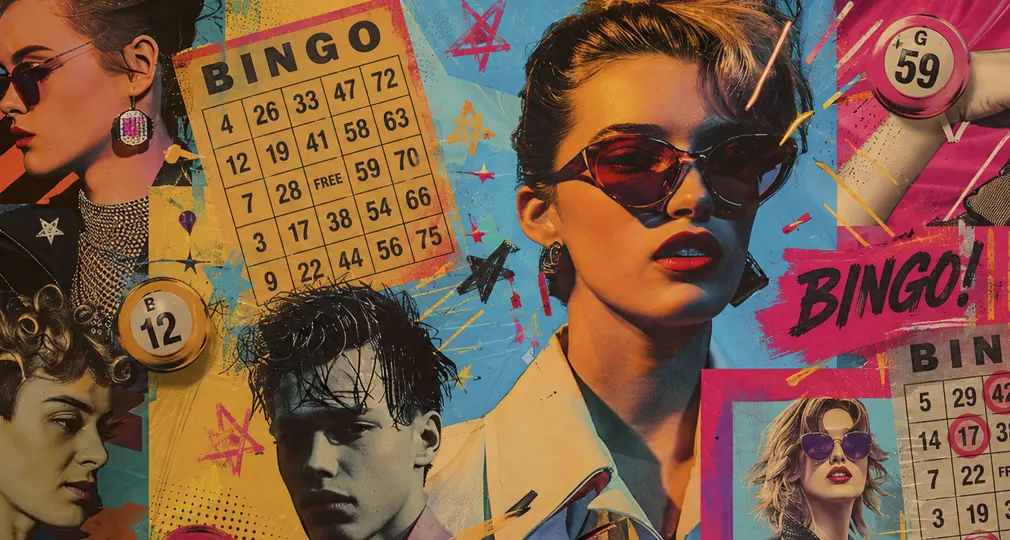
Visuals helped bingo survive because the game has objects people recognise instantly. Dabbers, cards, numbered balls, bright boards, prize tables, lucky mascots, neon signs, paper slips, plastic chairs – none of this is glamorous, and that is exactly why it works. Pop culture loves props that carry a whole world in one glance, and bingo has plenty of them. Honestly, a bingo dabber is almost comic-book simple: one chunky marker, one nervous hand, one tiny dream of shouting first.
Why Bingo Works in Films and Series
Cinema and series use bingo when they need a room full of instant stakes without explaining the rules. It can show loneliness, community, aging, rebellion, small-town routine, sudden luck, or a character trying to belong somewhere. A bingo hall can be warm or depressing, hilarious or tense, depending on lighting, sound, and who is holding the card. The beauty is that nobody needs to say, “This matters”; the almost-winner face says it for them.
The Numbers Made It Easy to Remix
Mechanically, bingo is ridiculously remixable, and that is one reason it slipped into so many cultural formats. Replace numbers with songs and you get music bingo; replace numbers with movie clichés and you get watch-party bingo; replace them with workplace phrases and you get meeting bingo. The structure stays the same: random call, recognition, marking, tension, win condition. That little engine is tough as nails, and designers love engines that can wear different costumes without breaking.
| Remix type | What replaces numbers | Best setting | Why players like it |
|---|---|---|---|
| Music bingo | Song titles or artists | Bars, pubs, parties | People can sing while playing |
| Movie bingo | Tropes and scenes | Watch parties | Turns passive viewing into a game |
| Office bingo | Corporate phrases | Meetings and remote work | Makes boring calls survivable |
| Fitness bingo | Exercises or goals | Gyms and wellness groups | Adds challenge without complex tracking |
| Classroom bingo | Vocabulary or facts | Schools and training | Learning feels less dry |
Community Is the Real Jackpot
Prizes matter, sure, but bingo’s actual jackpot has always been the room. People return because they know the caller, the staff, the regulars, the good seats, the bad luck table, and the tiny rituals nobody writes down. For example, some players use the same pen every session, some refuse certain seats, and some swear a card “feels dead” after two weak calls. Is that logical? Not really. Is it part of the culture? Absolutely, and honestly, it is half the fun.
Advertising Learned to Use Bingo Energy
Brands like bingo because the format explains itself before the campaign even starts. A bingo card can sell a festival lineup, a TV premiere, a food challenge, a sports event, or a social media contest with almost no instruction. Marketers know that people like checking boxes, spotting patterns, and sharing completed cards, especially when the categories are funny or painfully accurate. Well, actually, bingo became a content format because it gives people a tiny mission, and tiny missions are engagement fuel.
Why Bingo Did Not Stay “Old-Fashioned”
Plenty of games get trapped in one generation, but bingo kept escaping because it does not depend on one style. It can be quiet in a church hall, loud in a club, camp in a drag venue, fast online, nostalgic on TV, and sarcastic as a meme. The rules are stable, but the mood can be rebuilt almost anywhere, which is rare. That flexibility is the whole cheat code – same skeleton, different room, new crowd.
The Pop-Culture Trick Is Tension Plus Recognition
Finally? No, scratch that, we are not doing school-report endings here. The real expert note is this: bingo became pop culture because it combines recognition with suspense better than people give it credit for. You recognise the call, mark the card, watch the gap shrink, and suddenly a harmless number game feels like a last-spin bonus round. That is why the game keeps showing up in halls, memes, drag nights, TV scenes, charity events, apps, and rave rooms – simple shell, ridiculous emotional punch, and yes, it still works.
Read more: Bingo Sites in Germany