



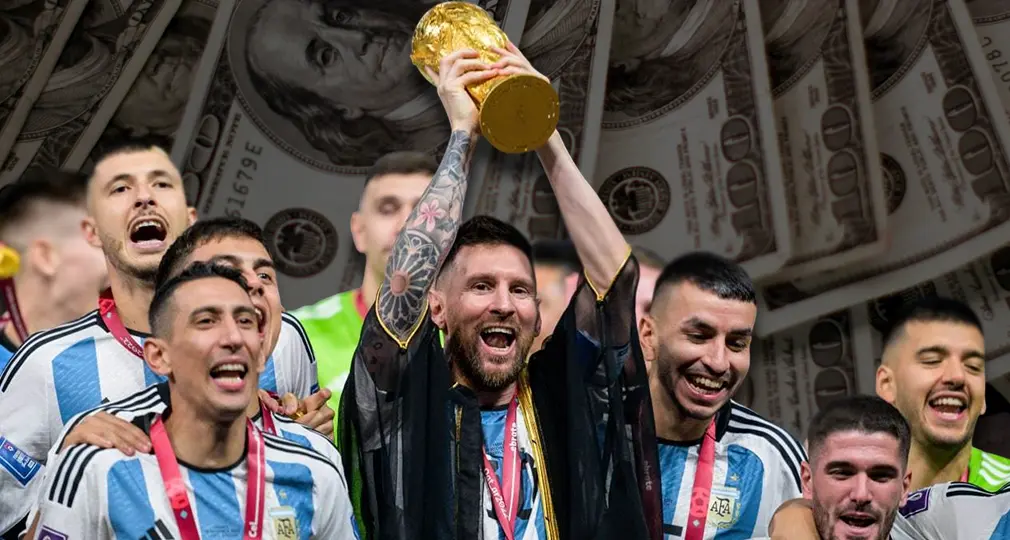
Honestly, betting on the reigning world champion feels like the safe side of the ticket, but that feeling can be expensive. Argentina came into the 2026 World Cup carrying the trophy, a settled coaching structure and a squad packed with players who already know how to survive knockout football. That is cool, no argument there, yet bookmakers know perfectly well that casual bettors love a champion and often shorten the price accordingly. Well, actually, the real question is not whether the defending champion is strong, because of course it is strong; the question is whether the available odds are bigger than the team’s true probability of winning. So the badge on the shirt matters, but the number beside the team name matters a lot more.
The Champion Badge Is Not a Betting Edge by Itself
Look, a world title proves that a team was the best during one tournament four years earlier, not that it automatically owns the next one. Form changes, key players age, coaches adjust their tactics and opponents spend years studying the champion’s patterns. Besides, between us, the public tends to price memories more aggressively than injuries, workload or a weak midfield matchup. This is where the champion tax appears: a famous side may trade at odds of 4.00 when a colder model values it closer to 5.00. That difference looks small on the screen, but over a long run it is the difference between a disciplined bet and a donation with a nice flag attached.
| Signal | What it really means | Betting value |
|---|---|---|
| Previous World Cup title | The team handled elite knockout pressure four years ago | Useful, but already built into the odds |
| Experienced core | Players understand tournament management and high-pressure matches | Positive when the core is still fit and productive |
| Huge public support | More recreational money arrives on the famous team | Can make the price worse |
| Familiar tactical system | Continuity reduces early-tournament chaos | Strong for group markets and match betting |
| Defending-champion pressure | Every opponent treats the match like a final | Often underestimated by casual bettors |
What World Cup History Actually Says
Historically, defending the World Cup has been brutally difficult, which is a nicer way of saying that the trophy usually changes hands. Only Italy and Brazil have won consecutive editions, and nobody has repeated the trick since Brazil in 1962. From 2002 through 2022, four of the six defending champions went out during the group stage: France in 2002, Italy in 2010, Spain in 2014 and Germany in 2018. That is 66.7% of the holders in that six-tournament sample disappearing before the knockouts, which is honestly a wild number for teams carrying so much market respect. France reached the 2022 final as the 2018 champion, so the curse is not magic, but the history definitely tells us to stop treating the holder as an automatic finalist.
Recent title defences before the 2026 tournament
| Defending champion | Next World Cup | Result |
|---|---|---|
| France | 2002 | Eliminated in the group stage |
| Brazil | 2006 | Eliminated in the quarter-finals |
| Italy | 2010 | Eliminated in the group stage |
| Spain | 2014 | Eliminated in the group stage |
| Germany | 2018 | Eliminated in the group stage |
| France | 2022 | Finished as runners-up |
Why Argentina Still Deserves Serious Respect
Technically, Argentina is not just a sentimental pick built around an old trophy photo. The team won its third World Cup in 2022 and carried continuity into the next cycle, with a stable tactical identity and several players entering what should be their prime years. For example, a midfield that can control tempo, win second balls and protect transitions is usually more valuable in tournament betting than one spectacular forward having a hot month. The squad also knows how to win ugly, manage penalties and slow down a match when momentum turns, and honestly, that works in knockout football. Still, Argentina lost both of its previous World Cup opening matches when defending the title, in 1982 and 1990, so even this team’s history comes with a warning label.
- Strong tournament experience across multiple positions
- A coach and tactical structure familiar to the core players
- Several midfield and defensive players in productive age ranges
- Proven ability to handle penalties and tight knockout matches
- Heavy market attention that may reduce the available betting value
The 2026 Format Changes the Calculation
Format-wise, the 2026 World Cup gives elite teams a softer route out of the opening phase but a longer road to the trophy. The field expanded to 48 teams divided into 12 groups of four, with the top two in each group and the eight best third-placed teams advancing. In plain numbers, 32 of 48 teams move forward, so 66.7% of the field reaches the Round of 32. That is great for a strong champion trying to survive one awkward result, but the finalists must now play eight matches instead of the traditional seven. Anyway, one extra knockout round means one extra chance for a red card, a penalty shootout, a muscle injury or a random deflection to wreck an outright ticket.
How the expanded tournament affects champion bets
| Format factor | 2026 number | Effect on the reigning champion |
|---|---|---|
| Total teams | 48 | More uneven group-stage matchups |
| Groups | 12 groups of four | Three group matches remain important |
| Teams advancing | 32 | One poor group result is less likely to be fatal |
| Share advancing | 66.7% | Qualification markets become less attractive at tiny odds |
| Matches for a finalist | 8 | More fatigue and one additional elimination risk |

Price First, Champion Second
Price-wise, I would never bet a defending champion simply because the squad looks loaded on paper. Decimal odds of 4.00 imply a 25% probability, odds of 3.00 imply 33.3%, and odds of 2.00 imply 50%. Suppose your properly built model gives Argentina a 28% chance of winning the tournament: a price of 3.20 is poor, 3.60 is almost neutral and 4.00 finally offers a meaningful edge. That is the whole game, really, and it is amazing how often people skip this part because the champion’s name looks comforting. Although, let us see the price before celebrating, because a brilliant team at bad odds is still a bad bet.
| Decimal odds | Implied probability | Expected return per 1 unit | Assessment |
|---|---|---|---|
| 3.20 | 31.25% | -10.4% | Pass — the price is too short |
| 3.60 | 27.78% | +0.8% | Almost no usable edge |
| 4.00 | 25.00% | +12.0% | Potential value |
| 4.50 | 22.22% | +26.0% | Strong theoretical value if the 28% model is sound |
Better Markets Than “Champion to Win the Tournament”
Practically, the outright winner market is not always the smartest place to express a positive opinion about the holder. A team can play seven excellent matches, lose a shootout in the semi-final and leave the outright ticket worth exactly zero, which is madness when you think about it. Besides, between us, narrower markets sometimes let you isolate the part of the team you actually trust, such as group strength, defensive control or consistent scoring. Betting Argentina to win its group, reach a specified knockout round or avoid defeat in selected matches may offer a cleaner risk profile than asking one ticket to survive an eight-match campaign. This is cool because you can be right about the team without needing it to lift the trophy on the final night.
- To win the group: useful when the draw is favourable and rotation risk is low.
- To reach the quarter-finals: reduces exposure to the final three knockout rounds.
- Draw no bet: protects the stake if a selected match finishes level.
- Asian handicap: useful when the champion is strong but priced too short in the moneyline.
- Team total goals: focuses on attacking output rather than the final result.
- Under goals: relevant when the champion controls matches without playing at a frantic tempo.
- To qualify from a knockout tie: includes extra time and penalties where offered.
Check the Squad, Not the Old Highlight Reel
Squad-wise, the four-year gap between World Cups is big enough to turn a perfect team into a strangely balanced reunion tour. Minutes played during the club season, recent muscle injuries, goalkeeper form and the age profile of the starting eleven all matter more than how beautiful the 2022 final looked. Well, actually, a champion with six starters above 30 is not automatically finished, but recovery becomes a serious issue when travel, heat and an extra knockout round pile up. Another thing: watch whether the replacement players can preserve the same pressing structure, because one injury to a unique midfielder may change the whole probability model. That is where the sharp work lives, not in counting stars above the badge.
- Record the likely starting eleven and the first five substitutes.
- Check club minutes from the previous eight to ten weeks.
- Flag players returning from hamstring, ankle or knee problems.
- Compare expected goals created and allowed against top-level opponents.
- Review set-piece defending, penalty takers and goalkeeper save quality.
- Estimate how much tactical quality disappears during rotation.
- Recalculate the probability after the official lineup is released.
A Simple Bankroll Plan That Does Not Get Silly
Bankroll-wise, the reigning champion should not receive a bigger stake just because the bet feels prestigious. A conservative recreational approach is usually around 0.5% to 1% of the total betting bankroll on one outright position, especially when the ticket may remain open for several weeks. On a 1,000-unit bankroll, that means roughly 5 to 10 units rather than 50 units thrown at a famous name after two late-night videos. Honestly, this works because tournament variance is savage and even a strong positive-expectation bet can lose without the analysis being wrong. In any case, never increase the next stake to recover a previous loss, because chasing turns a small pricing mistake into a full bankroll problem.
| Total bankroll | 0.5% stake | 1% stake | Upper-risk 1.5% stake |
|---|---|---|---|
| 200 units | 1 unit | 2 units | 3 units |
| 500 units | 2.5 units | 5 units | 7.5 units |
| 1,000 units | 5 units | 10 units | 15 units |
| 2,500 units | 12.5 units | 25 units | 37.5 units |
When I Would Leave the Champion Alone
Personally, I pass when the market price assumes near-perfect health, an easy draw and peak form all at once. I also step away when the public has pushed the odds down after one flashy 4–0 win against a weak opponent, because that is usually noise wearing a nice suit. For example, a move from 4.50 to 3.60 cuts the implied value from 22.2% to 27.8%, and suddenly the margin for error is almost gone. Another red flag is a squad depending heavily on one ageing creator or one goalkeeper running far above his long-term numbers. So yes, sometimes the sharpest champion bet is no bet at all, and honestly, that decision saves more money than any clever accumulator.
- The price has shortened sharply without meaningful team news.
- Two or more key starters carry unresolved injuries.
- The likely knockout route contains several elite opponents.
- The team’s recent chance creation is weaker than its final scores suggest.
- Public betting percentages are high while the odds continue drifting upward.
- The bookmaker’s outright market carries a heavy overround.
- You cannot explain the bet without mentioning the previous World Cup.
Ultimately, the reigning world champion is worth backing only when the odds underestimate the current team rather than celebrate the previous one. Argentina has the structure, experience and competitive edge to deserve a place near the front of the market, and that is genuinely impressive. Still, history, the eight-match format and plain knockout variance make a short outright price dangerous. My preferred move is to calculate a fair probability, demand at least a small margin above the bookmaker’s implied number and keep the stake boringly controlled. That may not sound as exciting as smashing the champion button, but between us, disciplined prices are where the real action is.
Read more: Argentina at World Cup 2026