


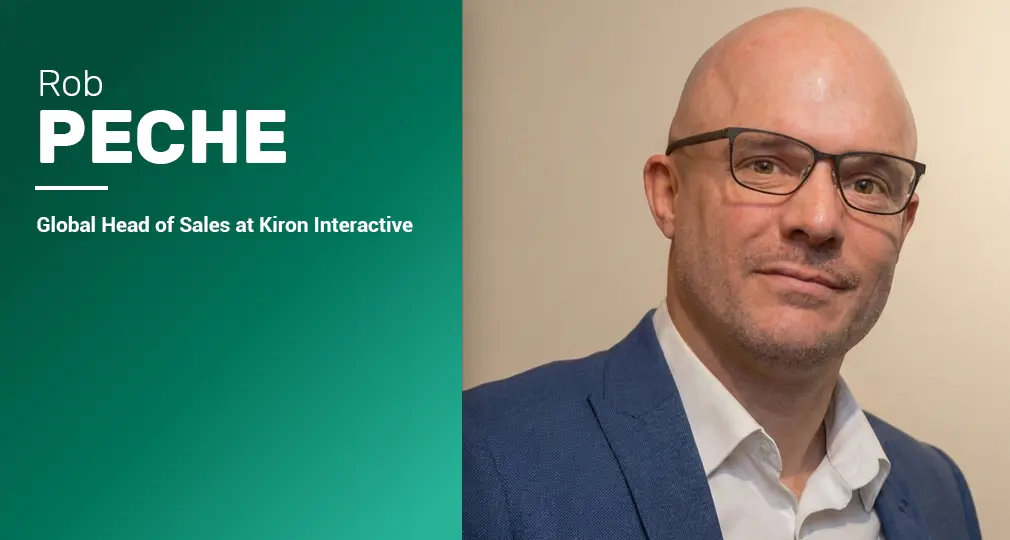
Rob, you have now been in the role of Global Head of Sales at Kiron Interactive for around five months. How would you describe your experience so far, and what have been your immediate priorities since stepping into the position?
The past five months have been incredibly insightful. One of the most rewarding parts of the role has been getting to know Kiron’s global business in depth, from the people and processes to the partners and wider market dynamics. Virtual sports has been a major part of my career for many years, so joining a company so deeply rooted in that space felt like a natural fit.
I’ve also really enjoyed working closely with my South African colleagues. Being South African myself, there is a strong sense of connection to both the people and the culture within the business. From day one, what has stood out most is the level of ambition across the company and the shared drive to keep pushing the business forward.
From a priorities perspective, my immediate focus has been on understanding the sales organisation, reviewing workflows and refining processes and pipelines to make sure we are set up to scale efficiently. It has been about building strong foundations while staying closely aligned to Kiron’s long term commercial strategy.
Your first major industry outing with Kiron was ICE 2026 in Barcelona. What did that event reveal to you about the brand’s current market position, and how did it shape your thinking moving forward?
ICE 2026 reinforced just how strong Kiron’s position is within the industry. From my perspective, we are firmly among the top tier of virtual sports providers globally. The event highlighted the strength of the team, the quality of the conversations we are having and the clear strategic direction the business is moving in.
Since joining, I’ve attended several major industry events across different regions, and each one has strengthened my confidence in both the product offering and the people behind it. There is a real focus and drive within the business.
What it also reinforced for me is the importance of staying true to what Kiron does best. Virtual sports is our core strength, and there is a significant opportunity to continue building on that globally across both retail and online channels. The strategy moving forward is centred on doubling down on our expertise, refining our focus and continuing to compete confidently alongside the biggest players in the space.
From a sales perspective, what stood out most in your early conversations with partners and prospects, particularly in terms of what operators are looking for from virtual sports and numbers suppliers today?
One of the biggest takeaways from my early conversations has been the strength of Kiron’s reputation in the market. We are seen as a trusted supplier with a particularly strong retail heritage, while continuing to grow across emerging and developing markets.
Operators today are looking for partners that are flexible, responsive and capable of adapting to different business models and market requirements. That is where Kiron has a real advantage. We are agile enough to tailor solutions around operator needs, whether that is through sportsbook integrations, RGS integrations or broader omnichannel opportunities.
There is also a growing demand for long term partnerships rather than transactional supplier relationships. Operators want providers who understand their markets and can support sustainable growth, and that aligns closely with how we approach the business.
Kiron operates in a highly competitive and fast moving space. How are you approaching the challenge of differentiating the brand and strengthening its commercial proposition globally?
Kiron has always been a pioneer within virtual sports, and that heritage matters. We have built a strong reputation through innovation, reliability and a deep understanding of the category.
What differentiates us is not only the quality of the products, but also the flexibility of the wider offering. BetMan, for example, gives operators a true omnichannel solution, which is increasingly important as retail and online experiences continue to converge.
I also believe there is real value in collaboration across the industry. We work closely with partners, peers and even competitors in certain areas to help drive the broader virtual sports category forward. There is a healthy balance between competitiveness and collaboration, and that mindset helps create better outcomes for operators and players alike.
Looking at the wider market, where do you see the biggest opportunities for growth over the next 12 months, and how is Kiron positioning itself to capitalise on those regions or verticals?
Latin America remains one of the most exciting growth opportunities for the business. We are also seeing strong momentum across parts of Europe, where demand for high quality virtual content continues to grow.
A major focus for us has been building stronger regional expertise within the sales organisation. Working closely with the wider global sales team has allowed us to have more localised and meaningful conversations with operators. Relationships remain incredibly important in many of these markets, and understanding the local landscape is critical.
We are investing in long term growth rather than short term wins. The groundwork being done now around partnerships, market positioning and commercial strategy will put us in a very strong position over the coming years.
Product innovation has always been central to Kiron’s offering. How closely are you working with internal teams to ensure that what you are taking to market aligns with operator demand and evolving player expectations?
I work very closely with the product and animation teams, and I genuinely feel part of that process. I’ve been involved in discussions around both new and existing products, offering input based on my experience across the virtual sports sector.
The goal is always to make sure we are developing and positioning products in a way that reflects real market demand and player behaviour. Different markets respond to different types of content, so having a broad and well balanced portfolio is incredibly valuable.
Whether it is Rodeio, BetMan, Soccer Stars, our NHL titles or our wider virtual sports offering, we are fortunate to have a portfolio that caters to a wide range of audiences and operator needs. That gives us the ability to be strategic in how we position products across different regions, from Africa to Europe and beyond.
Finally, as you look ahead to the rest of 2026, what are your key goals for the sales function, and what can partners expect from Kiron in terms of expansion, new deals and overall direction?
The priority for the sales team is simple: be knowledgeable, efficient and consistent. We want to build a culture where we deliver on what we promise and maintain strong, trusted relationships with our partners.
Our focus remains on creating engaging products that genuinely fit the needs of the markets our operators serve. Sustainable growth takes time, but we are building the right foundations and putting the right structures in place to support that growth long term.
Partners can expect continued expansion into new markets, stronger strategic relationships and ongoing collaboration with leading global operators. We have the right tools, the right products and the right people in place. Now it is about executing consistently and continuing to build momentum globally.