


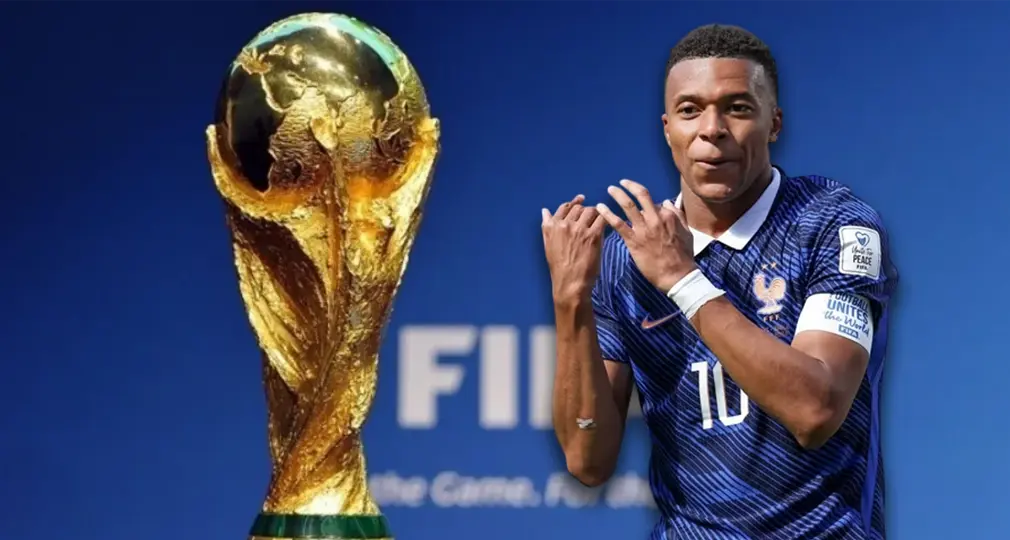
Well, actually, yes — and this is not just blue-shirt hype after one good night. France arrived at the 2026 World Cup with a 26-man squad that looks almost unfair when every position is written down. The 3–1 opening win over Senegal was messy for a while, then Kylian Mbappé switched the lights on and the whole thing suddenly looked frightening. Still, winning this expanded tournament means surviving eight matches, awkward pitches, heat, rotation and at least one night when the football simply refuses to behave. Put bluntly, Les Bleus can win it, but they are not carrying a free ticket to the final.
The straight answer: France are built for this
Honestly, France have the best mix of elite scoring, knockout experience and bench quality in the field. Didier Deschamps has already won the competition in 2018, reached the final again in 2022 and knows exactly how ugly a champion sometimes needs to be. Besides, between us, having Mbappé, Michael Olise, Ousmane Dembélé, Bradley Barcola, Désiré Doué and Marcus Thuram in one attacking pool is madness. The concern is not whether France can create a goal; it is whether the midfield balance and defensive concentration survive stronger opponents for a full month. So the honest verdict is contender, probably favourite, never certainty.
France’s current World Cup 2026 position
Numbers-wise, the situation is already comfortable without being fully settled. France collected three points against Senegal and posted a plus-two goal difference, while Norway opened with a 4–1 win over Iraq and moved ahead on goal difference. For example, victory over Iraq would put Les Bleus on six points and place qualification firmly in their own hands before the Norway match. The top two teams in each group advance, along with the eight strongest third-place teams, so the new format gives major nations a little breathing room. In any case, Deschamps will want first place because a cleaner knockout path is worth real money in a tournament this long.
Group I after the opening round, before France vs Iraq
| Position | Team | Played | Wins | Goals | Goal difference | Points |
|---|---|---|---|---|---|---|
| 1 | Norway | 1 | 1 | 4–1 | +3 | 3 |
| 2 | France | 1 | 1 | 3–1 | +2 | 3 |
| 3 | Senegal | 1 | 0 | 1–3 | −2 | 0 |
| 4 | Iraq | 1 | 0 | 1–4 | −3 | 0 |
The recent form is strong, but not spotless
Momentum-wise, France have won four of their last five matches and scored 12 goals across that run. They beat Brazil 2–1, Colombia 3–1, Northern Ireland 3–1 and Senegal 3–1, with the strange 2–1 home defeat against Côte d’Ivoire sitting in the middle like a coffee stain on a clean shirt. That scoring output is cool because it came against different styles, from Brazil’s technical quality to Senegal’s pace and physical pressure. At the same time, France conceded in all five games, which is not the kind of detail I throw away just because the forwards are entertaining. Anyway, four wins from five is title form; five straight games without a clean sheet is the warning label.
France’s five most recent results before the Iraq match
| Date | Match | Competition | Result |
|---|---|---|---|
| 26 Mar 2026 | Brazil vs France | Friendly | 1–2 |
| 29 Mar 2026 | Colombia vs France | Friendly | 1–3 |
| 4 Jun 2026 | France vs Côte d’Ivoire | Friendly | 1–2 |
| 8 Jun 2026 | France vs Northern Ireland | Friendly | 3–1 |
| 16 Jun 2026 | France vs Senegal | World Cup | 3–1 |
Form line: four wins, one defeat, 12 goals scored and six conceded. France averaged 2.4 goals per game during this five-match stretch.
Mbappé gives France the tournament’s nastiest weapon
Up-front, everything begins with Mbappé because pretending otherwise would be cute but pointless. His two goals against Senegal moved him to 58 for France and 14 at World Cups, only two behind Miroslav Klose’s tournament record of 16 at the time of this update. For example, the first Senegal goal came after a difficult opening hour, which is exactly why he matters: France do not need to dominate every minute when one burst can crack the match. Olise already looks like the connective piece who can receive between the lines and release Mbappé before a defence gets organised. That pairing works, honestly, and when Barcola can enter against tired legs, it gets a bit ridiculous.
The attacking options that make France difficult to plan against
| Player | Likely role | Main value | Question to solve |
|---|---|---|---|
| Kylian Mbappé | Left forward / central striker | Finishing, transition speed, penalties | Managing workload across eight possible games |
| Michael Olise | Central creator / right-sided playmaker | Final pass, combinations, set pieces | Maintaining influence against deeper blocks |
| Ousmane Dembélé | Right forward / roaming attacker | One-on-one disruption and unpredictability | Finding the freedom he receives at club level |
| Bradley Barcola | Wide forward / impact substitute | Pace against tired full-backs | Converting bench minutes into a starting claim |
| Désiré Doué | Flexible attacking midfielder | Ball carrying and positional variety | Winning minutes in an overcrowded attack |
| Marcus Thuram | Striker / wide forward | Physical presence and penalty-box runs | Producing quickly when rotated into the side |
The midfield decides whether the attack stays dangerous
Between-lines, France possess enough talent to play fast, slow or brutally direct, but the balance is still a live issue. Aurélien Tchouaméni provides the defensive platform, Adrien Rabiot covers ground, Manu Koné brings aggression and Warren Zaïre-Emery offers cleaner progression when the match needs more football. Besides, N’Golo Kanté remains available, and that sentence still makes opponents nervous even if his minutes have to be managed carefully. The trick is resisting the urge to cram every famous attacker into the same eleven and leave the centre exposed. So Deschamps may look conservative on the team sheet, but in knockout football that extra midfielder can be the difference between control and complete chaos.
Why the midfield can carry a title run
- Several combinations are available for different opponents.
- Tchouaméni can protect attacks built around five advanced players.
- Rabiot and Koné supply running power in hot conditions.
- Zaïre-Emery adds technical security when possession matters.
- Kanté remains an experienced specialist for high-pressure games.
Where the midfield can break
- No automatic combination has completely owned the tournament yet.
- Too many attackers can leave large spaces after turnovers.
- Fixture congestion will test recovery and concentration.
- Creative responsibility may become too dependent on Olise.
- Late-game control must improve against elite counter-attacking teams.

The defence is elite on paper and slightly noisy on grass
Defensively, the names are excellent: William Saliba, Dayot Upamecano, Ibrahima Konaté, Jules Koundé, Theo Hernández, Lucas Hernández and Mike Maignan would walk into most tournament squads. France allowed only four goals in six qualifiers, so this is not some broken unit held together by Mbappé highlights. Although, let’s see it clearly, conceding in five consecutive matches before Iraq suggests the spacing has not been as clean as Deschamps would like. Senegal created real danger before France took control, and a sharper opponent might punish those early openings instead of admiring them. In any case, one proper clean-sheet performance would calm this argument very quickly.
- Positive: qualification ended with a +12 goal difference.
- Positive: the centre-back pool allows rotation without a major talent drop.
- Concern: France conceded six times across the five matches before Iraq.
- Concern: aggressive full-backs can leave transition space on both sides.
- Key test: the final group game against Erling Haaland and Norway.
The 48-team format helps France — until it does not
Format-wise, the expanded World Cup gives France more protection in the group but demands more work later. A champion now has to play eight matches rather than seven, including the new round of 32, and that extra knockout fixture is not decorative. The deep French bench is therefore a serious competitive advantage because Deschamps can rotate two or three positions without turning the side into strangers. At the same time, every additional elimination match creates another chance for a red card, penalty shoot-out, injury or one ridiculous deflection to wreck the plan. That is why squad depth improves France’s probability, while the longer route prevents any sensible analyst from treating them like a lock.
The route a 2026 World Cup champion must complete
| Stage | Matches at stage | France’s edge | Main danger |
|---|---|---|---|
| Group stage | 3 | Superior depth and multiple scoring options | Dropping first place through careless rotation |
| Round of 32 | 1 | More quality than most possible opponents | Underestimating a compact underdog |
| Round of 16 | 1 | Major-tournament experience | First genuinely elite tactical matchup |
| Quarter-final | 1 | Mbappé can decide an even contest | Fine margins, penalties and fatigue |
| Semi-final | 1 | Deschamps has repeatedly managed this stage | Accumulated injuries and suspensions |
| Final | 1 | Players who have already lived the occasion | One match decides everything |
What the betting market is saying
Market-wise, France were trading in roughly the 4/1 to 6/1 range to win the World Cup on 22 June, depending on the bookmaker and region. Those prices translate to a raw implied probability between 20.0% and 14.3% before the bookmaker margin is removed. A separate Reuters survey of 160 economists found that 35% selected France as the eventual champion, ahead of Spain on 31%, though that is a prediction poll rather than a calibrated probability model. For example, the market shortened France after the Senegal victory because Mbappé looked healthy and decisive, not because one result erased every structural risk. So the market agrees France are the leading candidate, but it is still pricing a much greater chance that somebody else wins.
Market snapshot recorded on 22 June 2026
| Indicator | Figure | How to read it |
|---|---|---|
| Outright winner price | Approximately 4/1–6/1 | France were at or near the top of major winner markets. |
| Raw implied probability | 14.3%–20.0% | The figure does not remove the bookmaker’s built-in margin. |
| Reuters economist poll | 35% picked France | 160 respondents participated; this is opinion, not a model. |
| Current market position | Leading favourite | France’s price strengthened after beating Senegal. |
Betting reality: a favourite at 4/1 still loses in roughly four out of five outcomes using the raw implied figure. Odds also move constantly, and no market price guarantees value.
The five things that can stop France
Risk-wise, the biggest threat is not a lack of talent but a failure to make all that talent fit together under pressure. Dembélé has not always received the same central freedom for France that makes him devastating at club level, while the attack increasingly flows through Mbappé and Olise. A second issue is defensive transition, particularly when both full-backs advance and the midfield is stretched behind them. Heat, awkward surfaces and an eight-match schedule add physical randomness that no tactical board can completely remove. Lastly, the knockout bracket may place Spain, Argentina, England, Portugal, Brazil or Germany in the way, and beating several elite teams consecutively is never normal, even for this squad.
- Attacking congestion: famous names do not automatically create positional balance.
- Defensive transitions: France have recently allowed opponents too many clean breaks.
- Dependence on Mbappé: the captain remains the main finisher and emotional reference point.
- Eight-match workload: fatigue and muscle injuries become more likely deep into July.
- Bracket volatility: one poor group result can create a brutal knockout route.
What France need from the remaining group matches
Path-wise, Iraq should be the match where France control possession, rotate carefully and avoid turning a simple evening into theatre. Three more points would almost certainly settle qualification and allow Deschamps to manage minutes before Norway. That final game is the more revealing examination because Haaland punishes loose centre-back spacing faster than almost anyone alive. Besides, finishing first could protect France from a more dangerous early knockout opponent, although the final bracket depends on results across all 12 groups. In any event, the target is seven or nine points, first place and no unnecessary injuries.
France’s Group I schedule
| Date | Fixture | Location | Status | Main objective |
|---|---|---|---|---|
| 16 Jun | France vs Senegal | New York / New Jersey | Won 3–1 | Completed |
| 22 Jun | France vs Iraq | Philadelphia | Upcoming at update time | Win, rotate and control the game |
| 26 Jun | Norway vs France | Foxborough / Boston area | Upcoming | Secure first place in Group I |
My percentage call on France
Verdict-wise, I put France in the 17% to 20% championship range at this stage, which is enormous for a 48-team tournament and still nowhere near certainty. The squad quality supports the upper end, the expanded knockout route drags the number back down and the recent lack of clean sheets prevents me from getting carried away. Honestly, this team can play an average first half and still finish the night with Mbappé smiling beside a 3–1 scoreline, which is a ridiculous luxury. Yet price matters: backing a great team at a bad number is still a bad bet, no matter how expensive the substitutes look. France are the side I would least enjoy opposing, but I would not confuse fear with guaranteed value.France do not need to be beautiful for eight straight matches; they need to be alive when Mbappé gets his two or three decisive moments. Keep the midfield balanced, stop gifting one goal per night and this squad can absolutely lift the trophy. Ignore those details, and even the deepest bench in the tournament will be watching the final from a hotel television.
Read more: How the Groups and Playoffs Work at the World Cup